

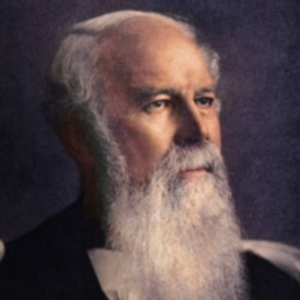
J. C. Ryle
(1816–1900) was an influential evangelical preacher, author, and the first Bishop of Liverpool. He remains widely known for his clear biblical teaching and enduring works, including *Expository Thoughts on the Gospels*.
I pity the person who never thinks about Heaven. I use that word in its broadest and most familiar sense: the future home of all true Christians, after the dead have been raised and this present world has passed away. A heart that never thinks of that home must be cold and unfeeling; a mind that never considers Heaven must be dull and fixed on earthly things.
Any one of us may die today. As the old saying puts it, we are in death even in the midst of life. Sooner or later, we must all die. The youngest, fairest, strongest and cleverest will one day fall before the scythe of the King of Terrors. Nor will the world continue for ever as it is now. Its affairs will finally be brought to an end. The King of kings will come, take His great power and reign. The judgement will be set, the books opened, the dead raised and the living changed.
Where, then, do we hope to go? If we know anything of true faith in the Lord Jesus Christ, we hope to go to Heaven. Surely it is reasonable to ask people to consider this subject.
What will Heaven be like?
The question is deep, certainly, but there is nothing presumptuous about considering it. Someone preparing to sail to Australia or New Zealand to settle there naturally wants to know something about a future home: its climate, work, people, ways and customs. These are matters of great interest.
In the same way, you are leaving the land of your birth and going to spend the rest of your life in a new world. It would be strange if you had no desire to learn about your new home.
If we hope to live for ever in the heavenly homeland God has promised (Heb. 11:16), surely we should seek all the knowledge of it that we can. Before we go to our eternal home, we should try to become acquainted with it.
Scripture reveals many things about Heaven that I will deliberately pass over. Everyone there will share one faith and one experience: chosen by the same Father, cleansed by the same atoning blood, and made new by the same Spirit. Perfect holiness, love and knowledge will be the everlasting order of the kingdom. These truths are ancient and precious, but I do not intend to dwell on them here.
It is enough to say that Heaven is the eternal presence of everything that can make a saint happy, and the eternal absence of everything that can cause sorrow. Sickness, pain, disease, death, poverty, toil, money and anxiety will be gone. So will ignorance, misunderstanding, slander, lies, strife, quarrels, envy, jealousy and ill temper. Unbelief, scepticism, wickedness, superstition, heresy, division, wars, fighting, bloodshed, murder and lawsuits will have no place there. These things may live and flourish on earth for a time, but in Heaven not even their footprints will be found.
John writes that nothing unclean, shameful or deceitful will enter the holy city; only those whose names are written in the Lamb’s book of life will enter (Rev. 21:27). There will be no night, and God Himself will give light to His people; they will reign for ever (Rev. 22:5). The redeemed will never hunger or thirst again, nor suffer the sun’s scorching heat. The Lamb at the centre of the throne will shepherd them and lead them to springs of the water of life, and God will wipe away every tear (Rev. 7:16–17).
John also sees God dwelling with His people. He will be with them and be their God. “There will no longer be any death” (Rev. 21:4, LSB); mourning, crying and pain will be gone, because the former order of things will have passed away.
Listen, too, to the glorious dreamer John Bunyan, though he wrote with an uninspired pen:
In my dream, I saw the two men go in through the gate. As they entered, they were transformed and clothed in garments that shone like gold. Some met them with harps and crowns, which were given to the Pilgrims: the harps for worship, and the crowns as tokens of honour.
Then I heard all the bells in the City ring for joy, and the Pilgrims were welcomed into their Lord’s joy.
I heard Christian and Hopeful themselves singing loudly, giving blessing, honour, glory and power to the One seated on the throne and to the Lamb (see Rev. 5:13).
As the gates opened to let the men in, I looked after them. The City shone like the sun. Its streets were paved with gold, and many people walked there with crowns on their heads, palms in their hands and golden harps with which to sing praise. Angelic beings with wings sang to one another without ceasing, declaring the Lord’s holiness. Then the gates were shut. When I had seen all this, I wished that I were among them.
But I will not dwell on these things. I deliberately pass them by, because I want to confine this article to one matter of deep and momentous interest: the mutual recognition of saints in the next world. I want to consider the question, Shall we know one another in Heaven?
What does Scripture say? That is all I care to know. I freely admit that the Bible contains relatively few passages that touch directly on this subject. I also acknowledge that godly and learned teachers do not all agree with me. I have heard many imaginative arguments against the view I hold. But in theology I dare not call any human being my master or father. My only aim is to discover what the Bible says and take my stand on its teaching.
Consider what Paul says to the Thessalonians. He asks what his hope, joy and crown of boasting will be before the Lord Jesus at His coming, and answers that it will be the Thessalonians themselves (1 Thess. 2:19). Surely this means that Paul expected to recognise his beloved converts when Christ returns. He rejoiced at the thought of seeing them face to face on the last day, standing with them before the throne and saying, in effect, “Here I am, with the people You gave to my ministry.”
Now consider what the same apostle says in the same letter to comfort mourners. He does not want believers to grieve like those without hope over Christians who have died. Since Jesus died and rose again, God will bring with Jesus those who have fallen asleep in Him (1 Thess. 4:13–14).
These words would offer little consolation if they did not point towards the mutual recognition of the saints. The hope Paul holds out to weary Christians is that they will meet their beloved friends again. He does not merely say, “Do not grieve: they are at rest, happy, free from pain and trouble, and better off than they would be here.” He goes further: God will bring them with Christ when He returns. You have not been parted for ever. You will meet again.
I commend these passages to the reader’s careful thought. To me, they point to one conclusion: the saints in Heaven will know one another. They will have the same bodies and characters they had on earth, though their bodies will be perfected and transformed like Christ’s body in His transfiguration, and their characters will be perfected and purified from every sin. They will still be themselves. When the redeemed meet their friends in Heaven, they will know them at once, and be known by them.
There is something indescribably glorious in this prospect. Few things strike me more deeply when I look ahead to the good things still to come. Heaven will not feel like a strange place when we arrive. We will not be troubled by the cold, shy unease of knowing nothing about those around us. We will feel at home. We will see all those we have read about in Scripture, know them and recognise the particular graces God gave each of them.
We will look upon Noah and remember his witness for God in ungodly times; Abraham and remember his faith; Isaac and remember his meekness; Moses and remember his patience; David and remember all his troubles.
We will sit with Peter, James, John and Paul, remembering their labours as they laid the foundations of the Church. What blessed and glorious knowledge and fellowship that will be! If it is pleasant to know even one or two saints and meet them from time to time now, what will it be to know them all and live with them for ever?
This prospect is not only glorious; it is indescribably comforting. It sheds light on the darkest hours of life and takes away much of the terror of the sickbed and the grave. Our beloved friends who have fallen asleep in Christ are not lost. They have only gone before us. Those who belong to the same God and share the same grace cannot be separated for long. They will surely come together again when this world has passed away. Our happy fellowship with Christian friends has been interrupted for a little while and will soon be resumed for ever. These eyes will look on their faces again, and these ears will hear them speak. That meeting will be blessed and happy indeed—better a thousand times than the parting.
We parted in sorrow, but we will meet in joy. We parted in stormy weather, but we will meet in a calm harbour. We parted amid pain, groaning and weakness, but we will meet in glorious bodies, able to serve our Lord for ever without distraction. Best of all, we will meet never to be parted again: never to shed another tear, never to mourn, never again to say goodbye.
What a blessed thought: the saints will know one another in Heaven!
How much there will be to talk about! At last, we will see the wonderful wisdom in everything we had to pass through during our earthly lives. We will remember the whole way along which God led us and say, “Wisdom and mercy followed me all the days of my life.”
In sickness and pain,
in loss and disappointment,
in poverty and trouble,
in bereavement and separation,
in every bitter cup I had to drink,
in every heavy burden I had to carry—in all of it, there was perfect wisdom.
We will see it at last, even if we could not see it before. We will all see it together and join in praising Him who led us by the right way to a city in which to dwell (Ps. 107:7). Surely, next to the thought of seeing Christ in Heaven, there is no happier thought than seeing one another there.
Shall we get to Heaven at all?
This is the great question the subject should press upon us, and we should resolve, like people of courage, to face it honestly. What will it profit you or me to study theories about the life to come if we do not know whether we will be saved or condemned on the last day? Let us rouse our sleepy minds and consider this momentous question.
We must always remember that Heaven is not a place where every kind of person will go as a matter of course. Its inhabitants will not be the discordant, mixed crowd some people imagine. Heaven is a place prepared for a people prepared for it. Those who dwell there will be united in heart and mind, sharing one faith and one character. They will be ready to recognise one another. But are we ready for Heaven? Will we ourselves get there?
Why should we not get to Heaven? Let us put that question before ourselves too, and face it honestly. At God’s right hand is One who is able to save completely all who draw near to God through Him (Heb. 7:25). He is as willing to save as He is able. The Lord Jesus Christ died for sinners on the cross and paid the immense debt with His own blood. He now sits at God’s right hand as the Advocate and Friend of all who desire to be saved. At this very moment, He is ready to show grace.
Surely, if we do not reach Heaven, the fault will be entirely our own. Let us rise and take hold of the hand held out to us from Heaven. Let us remember the promise of 1 Jn. 1:9: if we confess our sins, “He is faithful and righteous to forgive us our sins” (LSB), and to cleanse us from every kind of unrighteousness.
The prison doors stand wide open: let us go out and be free.
The lifeboat is alongside: let us get aboard and be safe.
The bread of life is before us: let us eat and live.
The Saviour stands before us: let us hear His voice, believe and make sure that our hope is in Heaven.
Do we have a good hope of going to Heaven—a hope grounded in Scripture, reasonable, and able to bear close examination? Then let us not be afraid to think often about Heaven and rejoice in the good things to come.
I know that even a believer’s heart may sometimes fail when he thinks about the last enemy and the unseen world. At best, the Jordan is a cold river to cross, and many people tremble when they think of their own crossing. But let us take comfort by remembering the other side. Christian reader, think of seeing your Saviour and beholding your King in His beauty! At last, faith will give way to sight, and hope to certainty. Think of the many loved ones who have gone before you, and of the joyful meeting that awaits you.
You are not going to a foreign country; you are going home. You are not going to live among strangers, but among friends. You will find them all safe and well, ready to welcome you and join in one unbroken song of praise. So let us take comfort and persevere. With such prospects before us, we may well say, “It is worth while to be a Christian!”
I will conclude with a passage from Bunyan’s Pilgrim’s Progress that deserves to be read again.
Pliable asked Christian, “Tell me more, Christian. What are these glorious things, and how can they be enjoyed?”
“I can understand them better in my mind than I can explain them with my tongue,” said Christian. “But since you want to know, I will describe them from my Book.”
“Do you really believe that what your Book says is true?” asked Pliable.
“Yes, absolutely,” Christian replied, “for it was written by Him who cannot lie.”
“What are these glorious things you have been speaking about?” asked Pliable.
“There is an everlasting kingdom and eternal life, which will be given to us, and we will live there for ever,” Christian answered.
“What else?” asked Pliable.
“We will receive crowns of glory and garments that shine like the sun.”
“That is wonderful!” said Pliable. “What else will there be?”
“There will be no more crying or sorrow, for the One who reigns there will wipe every tear from our eyes.”
“What company will we have there?” Pliable asked.
Christian answered, “We will be with seraphim and cherubim, creatures so glorious that they will dazzle your eyes. You will also meet thousands upon thousands who have gone before us to that Place. They are loving and holy, fully accepted by God and standing in His presence. In short, we will live with all God’s redeemed people, wearing golden crowns and holding golden harps. We will see those who, out of love for the Saviour, were cut to pieces, burned in flames, eaten by beasts or drowned in the sea. They are all made perfect and clothed with immortality.”
“Just hearing about this is enough to fill my heart with delight!” said Pliable. “How can these things be enjoyed? How can we obtain them?”
Christian replied, “The Lord, the Ruler of that country, has written in His Book that if we are truly willing to receive it, He will give it to us freely.”
“Well, my good companion,” said Pliable, “I am delighted to hear about these things! Come—let us quicken our pace!”
Has this article encouraged or helped you?
Exposit the Word is a reader-supported ministry dedicated to proclaiming God’s Word faithfully and freely. If you have been blessed by this ministry and would like to help us continue producing biblical resources, please consider supporting us here.