

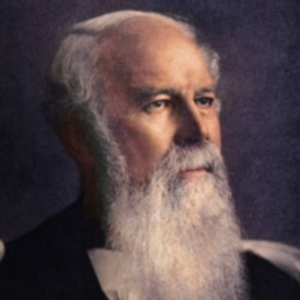
J. C. Ryle
(1816–1900) was an influential evangelical preacher, author, and the first Bishop of Liverpool. He remains widely known for his clear biblical teaching and enduring works, including *Expository Thoughts on the Gospels*.
(1) First, begin reading your Bible this very day.
The way to do something is to do it; and the way to read the Bible is actually to read it! Merely meaning, wishing, resolving, intending, or thinking about reading it will not move you forward by a single step. You must actually read it.
There is no easy or privileged road in this matter, any more than there is in prayer. If you cannot read for yourself, you must ask someone else to read it to you. But one way or another—through your eyes or your ears—the words of Scripture must actually pass through your mind.
(2) Read the Bible with an earnest desire to understand it.
Do not imagine for a moment that the main objective is simply to work through a certain number of printed pages, regardless of whether you understand them. Some uninformed people seem to think they have accomplished everything if they complete a set number of chapters each day, even though they have little idea what those chapters mean. Their only achievement is that they have moved their bookmark forward by a few pages.
This turns Bible reading into a mere religious ritual. It is almost as misguided as the Roman Catholic practice of attempting to gain spiritual benefit by repeating an enormous number of “Hail Marys” and “Our Fathers” while counting rosary beads. It recalls the story of the poor Khoikhoi man who ate a Dutch hymnbook because he had seen how it comforted the hearts of his neighbours!
Establish this firmly in your mind as a general principle: a Bible that is not understood is a Bible that does you no good. As you read, frequently ask yourself, “What does this mean?” Dig for its meaning as a man digs for gold.
(3) Read the Bible with childlike faith and humility.
Open your heart as you open God’s Book, and say, “Speak, Yahweh, for Your servant is listening” (1 Sam. 3:9).
Resolve to believe fully whatever you find there, however strongly it may oppose your own desires and prejudices. Determine to receive wholeheartedly every declaration of truth, whether you like it or not.
Beware of the miserable habit into which some Bible readers fall: they accept certain doctrines because those doctrines please them, but reject others because they condemn either themselves, a relative, or a friend. If we read the Bible in this way, it becomes useless to us. Are we to judge what ought to be included in God’s Word? Do we know better than God?
Settle it firmly in your mind that you will receive everything and believe everything Scripture teaches. Whatever you cannot understand, you will humbly accept on the authority of God.
When you pray, remember that you are speaking to God and that God hears you. But when you read Scripture, remember that God is speaking to you. Your responsibility is not to dictate, but to listen.
(4) Read the Bible in a spirit of obedience and personal application.
Begin your study each day with a firm determination that you will:
live according to its principles,
rest upon its promises and declarations,
and obey its commands.
As you work through each chapter, ask yourself, “How should this affect my thinking and daily conduct? What is this teaching me?”
It is poor work to read the Bible merely out of curiosity or for speculation—simply to fill your head and store your mind with opinions—while refusing to allow the Book to influence your heart and life.
The Bible is read best by the person who puts it most faithfully into practice.
(5) Read the Bible daily.
Make it part of each day’s responsibilities to read and meditate upon some portion of God’s Word. The private means of grace are as necessary to our souls each day as food and clothing are to our bodies.
Yesterday’s food will not sustain the labourer today, and today’s food will not sustain him tomorrow. Follow the example of the Israelites in the wilderness: gather fresh manna every morning.
Choose the times and hours that work best for you. Do not rush carelessly through your reading. Give your Bible the best part of your time, not the worst. Whatever plan you follow, make it a settled rule of your life to come to the throne of grace and to open God’s Word every day.
(6) Read all of the Bible, and read it in an orderly way.
I fear that there are many parts of God’s Word that some people never read at all. To say the least, this is a very presumptuous habit. “All Scripture is God-breathed and profitable” (2 Tim. 3:16).
This neglect is one reason why so many people today possess unbalanced and poorly proportioned views of biblical truth. Their Bible reading consists of continually dipping into one place and then selecting something from another. They appear to have no intention of reading regularly through the whole Book.
This is also a serious mistake. There is no doubt that, during times of sickness and affliction, it is entirely appropriate to seek out passages especially suited to our circumstances. Apart from such occasions, however, I believe that the best approach by far is to begin reading the Old and New Testaments at the same time, to read each of them straight through to the end, and then to begin again.
This is a matter about which each person must be fully convinced in his own mind. I can only say that this has been my own practice for nearly forty years, and I have never found any reason to change it.
(7) Read the Bible fairly and honestly.
Determine to understand everything according to its plain and natural meaning, and treat all forced interpretations with great suspicion.
As a general rule, whatever a verse of the Bible plainly appears to mean is what it does mean. Cecil’s principle is extremely valuable: “The right way of interpreting Scripture is to take it as we find it, without any attempt to force it into any particular theological system.”
(8) Finally, read the Bible with Christ continually in view.
The great and primary purpose of all Scripture is to testify about Jesus Christ.
The ceremonies of the Old Testament are shadows of Christ. Its deliverers are types of Christ. Its prophecies are filled with Christ’s sufferings and with the glory that is still to come.
His first coming and His second coming;
the Lord’s humiliation and His glorious kingdom;
His cross and His crown—
all shine throughout the Bible.
Hold firmly to this guiding principle if you want to read the Bible rightly.
I could easily add more to these suggestions if space permitted. Yet, few and brief though they are, you will find them immensely profitable when you put them into practice.
Has this article encouraged or helped you?
Exposit the Word is a reader-supported ministry dedicated to proclaiming God’s Word faithfully and freely. If you have been blessed by this ministry and would like to help us continue producing biblical resources, please consider supporting us here.
Very helpfulI particularly number 4 that recommends reading the bible in a spirit of obedience and personal application
Thank you