
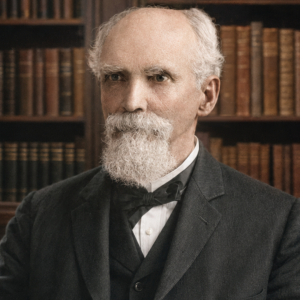
E. M. Bounds (1835–1913)
was an American pastor and author. He is best remembered for his timeless Christian writings on prayer, which continue to challenge believers to pursue deeper holiness and dependence upon God.
We are constantly exerting ourselves—sometimes almost to breaking point—to devise new methods, plans, and organisations to advance the Church and make the gospel more effective and far-reaching. Yet this spirit of the age tends to lose sight of the man himself, or to bury him beneath the plan or organisation. God’s plan gives great importance to the man—far more than to anything else. Men are God’s method. The Church is looking for better methods; God is looking for better men.
“There was a man having been sent from God, whose name was John” (John 1:6). The age that announced Christ and prepared His way was centred upon that man, John. “For a child will be born to us, a son will be given to us” (Isa. 9:6). The salvation of the world comes through that Son who lay in the cradle. When Paul points to the personal character of the men who established the gospel throughout the world, he explains the secret of their success. The glory and effectiveness of the gospel are entrusted to the men who proclaim it.
When Scripture declares, “For the eyes of Yahweh move to and fro throughout the whole earth that He may strongly support those whose heart is wholly devoted to Him” (2 Chron. 16:9), God is declaring the necessity of such men and His purpose to use them as channels through which He displays His power in the world. This urgent and vital truth is easily forgotten in an age dominated by machinery and systems. Forgetting it is as destructive to the work of God as removing the sun from its place in the heavens. Darkness, confusion, and death would follow.
What the Church needs today is not more machinery, better machinery, new organisations, or a greater variety of novel methods. It needs men whom the Holy Spirit can use—men of prayer, men who are mighty in prayer. The Holy Spirit does not flow through methods, but through men. He does not come upon machinery, but upon men. He does not anoint plans, but men—men of prayer.
A distinguished historian once said that the particular qualities of personal character have more influence upon national revolutions than either philosophical historians or democratic politicians are willing to admit. This principle applies with full force to the gospel of Christ. The character and conduct of Christ’s followers are what carry Christianity into the world and transform both nations and individuals. This is especially true of those who preach the gospel.
Both the character and the earthly progress of the gospel are entrusted to the preacher. He may either strengthen or spoil the message sent from God to man. The preacher is the golden pipe through which the divine oil flows. The pipe must not merely be made of gold; it must also be open and without defect, so that the oil may flow fully, freely, and without waste.
The man makes the preacher, and God must make the man. If such a comparison may be made, the messenger is more than the message, and the preacher is more than the sermon, because the preacher shapes the sermon. Just as the life-giving milk from a mother is an expression of her own life, everything a preacher says is coloured and permeated by what he is. The treasure is carried in earthen vessels, and the qualities of the vessel can affect its flavour and even discolour it.
The whole man stands behind the sermon. Preaching is not merely the performance of an hour; it is the overflow of a life. It takes twenty years to make a sermon because it takes twenty years to make the man. A true sermon is a living thing. It grows because the man grows. It is powerful because the man is spiritually strong. It is holy because the man is holy. It is filled with divine anointing because the man himself is filled with divine anointing.
Paul called it “my gospel” (Rom. 2:16). He did not mean that he had lowered the gospel by mixing it with his personal peculiarities, nor that he had claimed it selfishly as his own. Rather, the gospel had been placed within Paul’s heart and lifeblood as a personal trust. It was to be carried out through the particular qualities God had given him, and set ablaze and empowered by the intense energy of his soul.
What were Paul’s sermons? Where are they now? We possess outlines, scattered passages, and fragments carried to us upon the sea of divine inspiration. Yet Paul himself—greater than his sermons—still lives before us in the fullness of his character and stature, with his shaping hand still upon the Church. Preaching is only a voice. When the voice falls silent, its sound dies away. The text may be forgotten and the sermon may fade from memory, but the preacher lives on.
A sermon cannot rise in its life-giving power above the man who delivers it. Spiritually dead men produce dead sermons, and dead sermons bring death. Everything depends upon the preacher’s spiritual character. Under the old covenant, the high priest wore a plate of pure gold upon his forehead, engraved with the words, “Holy to Yahweh” (Ex. 28:36). In the same way, every preacher serving Christ must be shaped and governed by that holy declaration. It is a disgrace for Christian ministry to sink below the priesthood of Israel in holiness of character and purity of purpose.
Jonathan Edwards wrote, “I went on with my eager pursuit after more holiness and conformity to Christ. The Heaven I desired was a Heaven of holiness.” The gospel of Christ does not advance upon waves of popularity. It possesses no automatic power to spread itself apart from those who carry it. It moves as the men entrusted with it move. The preacher must embody the gospel. Its divine and most distinctive qualities must be visible in him.
The compelling love of Christ must rule the preacher as an outward-reaching, all-commanding, self-forgetting power. Self-denial must become part of his very being—his heart, his blood, and his bones. He must go out as a man among men, clothed with humility and living in meekness: wise as a serpent and innocent as a dove. He must bear the bonds of a servant while possessing the spirit of a king—royal and independent in bearing, yet marked by the simplicity and sweetness of a child.
The preacher must throw himself into the work of saving men with the complete surrender of a faith emptied of self and a zeal willing to spend itself entirely. Those who take hold of a generation and shape it for God must be wholehearted, heroic, compassionate, fearless, and ready to suffer as martyrs. If they are timid servants of the times or seekers of position; if they crave human approval or fear men; if their faith holds weakly to God or to His Word; or if their self-denial gives way before any form of selfishness or worldliness, they cannot take hold of either the Church or the world for God.
The preacher’s most searching and powerful preaching should be directed towards himself. His most difficult, delicate, demanding, and thorough work must be done upon his own soul. Christ’s training of the Twelve was His great, difficult, and lasting work. Preachers are not merely makers of sermons; they are makers of men and makers of saints. Only the man who has, by God’s grace, cultivated true manhood and holiness in himself is properly trained for such work.
God does not chiefly need great talents, great learning, or even men regarded as great preachers. He needs men who are great in holiness, great in faith, great in love, great in faithfulness, and wholly devoted to God—men who continually preach holy sermons in the pulpit and holy lives outside it. Such men can shape a generation for God.
The early Christians were formed according to this pattern. They were men of solid character, preachers shaped after the heavenly model—heroic, strong, disciplined, and holy. For them, preaching was a serious and demanding work of self-denial and self-crucifixion, a labour that could lead to martyrdom. They gave themselves to it in a way that left its mark upon their own generation and planted within it the beginnings of a future generation for God.
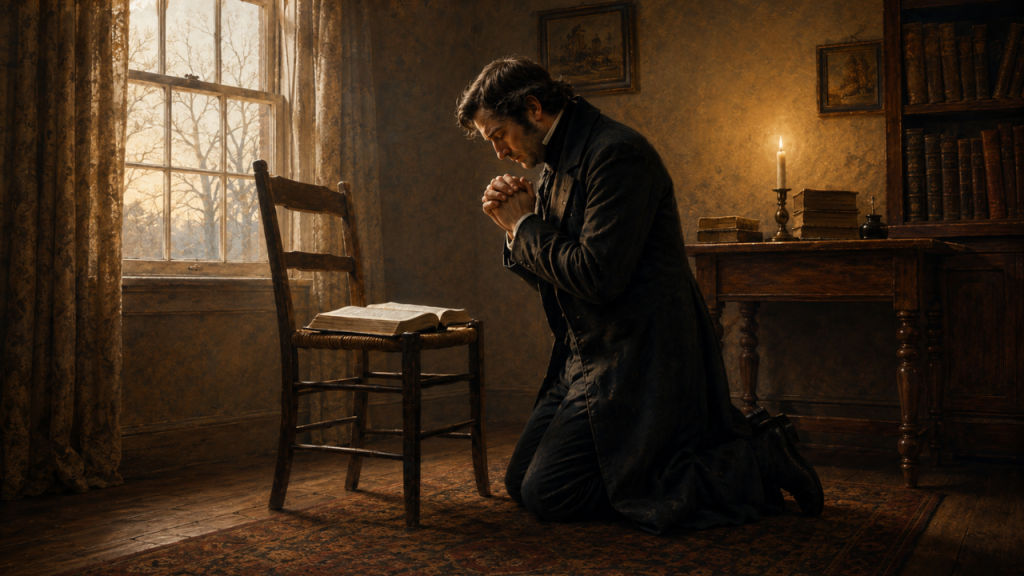
The preaching man must be a praying man. Prayer is the preacher’s mightiest weapon. It is an almighty force in itself, and it gives life and power to everything else.
The true sermon is formed in the prayer closet. The man—the man of God—is formed there too. His life and his deepest convictions are born in secret communion with God. The anguished burdens of his spirit, carried with tears, and his most weighty and precious messages are received when he is alone with God. Prayer makes the man; prayer makes the preacher; prayer makes the pastor.
The pulpit of our day is weak in prayer. Pride in learning resists the dependent humility that prayer requires. Too often, prayer in the pulpit is merely official—a performance included as part of the routine of a service. Prayer does not hold in the modern pulpit the mighty place it held in Paul’s life and ministry. Every preacher who fails to make prayer a powerful force in his own life and ministry is weak as an instrument in God’s work and powerless to advance God’s cause in this world.
Has this article encouraged or helped you?
Exposit the Word is a reader-supported ministry dedicated to proclaiming God’s Word faithfully and freely. If you have been blessed by this ministry and would like to help us continue producing biblical resources, please consider supporting us here.