

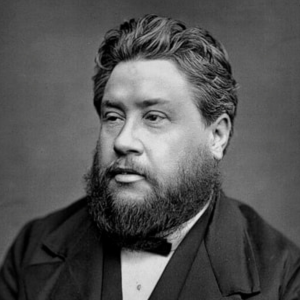
C. H. Spurgeon
Charles Spurgeon was one of the best-known English preachers of the 19th century. Converted to Christianity at the age of 15, he went on to preach to packed audiences across London and founded the Metropolitan Tabernacle, a pastors’ college, and an orphanage. A prolific author and publisher, his influential works include *Flowers from a Puritan’s Garden* and *A Defence of Calvinism*.
Delivered on the Lord’s Day Morning, 7 July 1872
Metropolitan Tabernacle, Newington
“The ox knows its owner, and the donkey its master’s manger, but Israel does not know; My people do not understand.” — Isa. 1:3
It is evident from this chapter that the Lord looks upon the sin of mankind with profound sorrow. We must speak of Him in human terms, and in doing so we are fully justified in saying that He does not view human sin merely as a Judge who condemns it, but also as a loving Father and Friend who, while He rightly rebukes the sinner, grieves deeply that there is such sin to condemn.
When He declares,
“Hear, O heavens, and give ear, O earth; for Yahweh speaks, ‘Sons I have reared and brought up, but they have revolted against Me.'” (Isa. 1:2, LSB),
these words are not simply an expression of astonishment or a declaration of offended justice. They carry the sorrow of a loving Father whose children have repaid His kindness with rebellion. The Most High presents Himself to us as One who mourns like a parent whose children have returned love with ingratitude. God is grieved by man’s sin.
That truth should encourage everyone who knows they have sinned against God to return to Him. If you grieve over your sin, remember that the Lord grieves over it too.
Here is a point where your heart may meet His. He does not greet the repentant sinner with cold severity, saying, “You chose your own path; now you must simply bear the consequences.” No. He rejoices when you return, just as He sorrowed when you wandered away. Let this wonderful truth of His love set the tone for everything we consider today.
Our subject this morning is mankind’s thoughtlessness towards God.
Here, Israel is not presented chiefly as a picture of believers, but as representing sinners generally. The charge applies to every ungodly person:
“They do not know. They do not consider.”
One of the hardest tasks in the world is to persuade people to think.
I mean to think seriously about spiritual realities—to think about their souls, their God, and eternity.
People can be persuaded to think about almost anything else. They may listen to Scripture being read, but they refuse to take it to heart. They may faithfully perform religious ceremonies, yet true worship of the God who is Spirit remains far from them. They refuse to examine their lives carefully and honestly until the Spirit of the living God opens their minds and teaches them true wisdom.
This morning I want to speak about this thoughtlessness in four ways.
First, we shall consider it as a serious and universal fault.
Second, we shall examine the circumstances that often make it even more serious.
Third, we shall ask what lies at the root of this terrible indifference.
Finally, we shall conclude with both earnest appeal and gracious invitation.
I. A Serious and Universal Fault
“Israel does not know; My people do not understand.”
Above all else, people are thoughtless towards God.
We might excuse someone for overlooking less important matters or neglecting people of little significance. But to live without thoughtful regard for our Creator, our Sustainer, and the One in whose hands our eternal destiny rests—this is astonishing folly as well as dreadful sin.
A courtier may neglect many people, but he takes care not to neglect his king.
When fathers send their sons into business, they advise them to pay attention to what matters most. They urge them to maintain good relationships with those who have the power either to help or to ruin them. Human nature readily seeks the favour of those in authority.
How much more remarkable, then, that mankind should forget the Almighty God—the One who raises up and casts down according to His will.
If only because God is infinitely great and we are entirely dependent upon Him, we might expect every reasonable person to seek to know Him and be at peace with Him. But when we remember that He is not only infinitely great, but also infinitely good, kind, compassionate, and gracious, our amazement at human thoughtlessness only increases.
Every good person desires the friendship of those who are themselves good. Extraordinary goodness naturally draws admiration, and most people gladly welcome the opportunity to associate with someone of outstanding character.
Yet this is not how people respond to God.
Everything about His character should draw us to Him, yet mankind runs from its own Creator.
If God were cruel rather than loving, people could scarcely treat Him with greater indifference than they already do.
Why is this?
Why should I neglect the One who is infinitely glorious, who has never wronged me, but has overwhelmed me with blessings?
When I consider how faithfully He provides for me every day…
When I remember how patiently He spares me despite all my sins…
When I think of how graciously He continues to invite me into peace with Himself…
…I can almost hear Him asking,
“Which of My kindnesses has caused you to neglect Me? Which of My blessings has led you to forget Me?”
Such is the madness of sin.
It causes people to forget the God who is present everywhere and to ignore the One whose mercies surround them every moment of every day.
What sorrow it is that God’s own people refuse even to consider Him.
This completes the opening section. In the next instalment, I’ll continue through the remainder of Section I, where Spurgeon shows that mankind is thoughtless not only towards God, but also towards their own souls, their eternal welfare, justice, gratitude, and true religion.
Man Is Thoughtless Towards His Own Soul
People are also thoughtless about themselves, especially regarding their greatest and most eternal interests.
It is tragic that in a matter of supreme importance—one that concerns their entire existence—people refuse to exercise the thoughtful reasoning God has given them.
Most people make little effort to examine their past. They do not honestly face their lives or look back with repentant hearts upon the sins they have committed.
Nor do they think seriously about the present. They waste life as though it had no connection with eternity, as though time existed merely for amusement or earthly labour. They fail to reflect properly upon God’s mercies or His judgments, upon their responsibilities or their sins. Instead, like travellers stumbling through thick darkness, they continue without noticing the solemn realities surrounding them.
The future receives no more attention than the past or present.
Whether it is the glory of eternal Heaven or the terror of everlasting Hell, people refuse to think about it.
How astonishing it is that immortal beings should rush towards unspeakable misery with their eyes shut, utterly unconcerned about the wrath that is to come. They refuse to weigh their souls in the scales of truth and discover what awaits them.
A thousand voices call out, urging them to stop and think. Yet they continue to drive recklessly through life, urging on the horses of their own destruction.
How fitting are the words of Scripture:
“Oh that they were wise, that they understood this, that they would discern their latter end!” — Deut. 32:29 (LSB)
People are thoughtless about themselves.
If we urged someone to concern themselves with matters that had nothing to do with them, we could understand them saying, “I have neither the time nor the interest.”
If this morning I were to preach about something affecting only the inhabitants of the moon, you would rightly reply, “Speak to those whom it concerns. It has nothing to do with us.”
But how can we explain the fact that people refuse to think about themselves?
The smallest distraction captures their attention, yet they will not consider their own souls or the eternity that lies before them. They will not meditate on the everlasting joy or everlasting misery that awaits them.
Even as I state this, my words seem far too calm. Perhaps you hear them with little emotion because these truths have become so familiar to us. Yet this is one of the greatest miracles of human depravity—indeed, one might almost call it madness—that people remain indifferent to their own highest good.
Again we must echo the words of Moses:
“Oh that they were wise, that they understood this, that they would discern their latter end!” — Deut. 32:29 (LSB)
Thoughtless Towards Justice and Gratitude
There is another aspect to this thoughtlessness.
People neglect not only their own welfare but also the claims of justice and gratitude. This makes their conduct not only foolish but shameful.
I have known men who would say, “Let justice be done, though the heavens fall.” They would rather suffer loss than gain anything dishonestly from another person. I believe there are people here today who possess such integrity.
I have also known people who would be deeply offended if anyone accused them of being ungrateful. They would regard themselves as dishonourable if they failed to repay kindness with kindness. They recognise that gratitude is a genuine obligation and would never wish to deny it.
Yet some of these very same people have spent their entire lives acting unjustly towards God and showing ingratitude to the One to whom they owe everything.
Think about it.
God created you.
Should He not receive your worship?
He has not only given you life but has preserved it every day since.
Should He receive no service from you in return?
Perhaps your path through life has been comparatively smooth. You are not among the poorest of the poor. You have not been deprived of your health or the use of your limbs. Your mind remains sound. You have not been struck down by paralysis. You are still able to work, to enjoy life, and to live among your fellow men.
Should God receive no thanks for all these mercies?
His service is not a burden but a delight to those who truly know Him.
Should you not gladly serve Him?
His law is perfectly righteous. Indeed, it contains the very foundation of all true justice.
Yet you have neither obeyed His commands nor loved Him with all your heart, soul, mind, and strength.
Can that possibly be right?
You are careful to fulfil your obligations to other people.
Will you rob God?
You would be ashamed to cheat your neighbour.
Will you then defraud the One who gave you life itself?
Will you continue withholding from Him the honour and glory that rightfully belong to Him?
Greater Privilege Brings Greater Responsibility
Notice that the text says,
“Israel does not know.”
“Israel” is a title of honour. It is the name of a prince.
There are people whose position in society ought especially to lead them to serve God.
The saying is true: privilege brings responsibility.
When the Lord gives someone wealth, influence, or honour, that person is under even greater obligation to live for His glory.
But I also speak to those who were raised by godly parents.
I speak to those who have grown up hearing the gospel, who have been taught the fear of the Lord, and who have lived among God’s people from childhood.
You have enjoyed privileges that countless others never received.
Surely you should not have forgotten your gracious Benefactor.
To whom much is given, much will also be required.
Is it not a disgrace that someone descended from a godly family should show no more serious thought about eternal things than those who have never known the truth?
You ought to feel deep sorrow that, until this very moment, you have proved unfaithful both to your spiritual heritage and to your God.
A Matter That Requires Personal Thought
One of the saddest features of this thoughtlessness is that it concerns a subject in which nothing can replace personal reflection.
No substitute exists for thoughtful engagement with the gospel.
Some say,
“I cannot think about these things myself, so I will pay someone else to do it for me. I will find a priest, give him money, and let him look after my soul just as my doctor looks after my body.”
This is nothing more than an invention of the sinful heart to silence an uneasy conscience. It is both useless and sinful.
The Lord requires the personal love of your own heart.
Nothing less will satisfy Him.
Others say,
“I attend church faithfully. I worship with God’s people. I give generously.”
Very well.
But God requires your heart.
If your heart has not been given to Him—if you do not love Him with all your soul, mind, and strength—then you have accomplished nothing of true religion.
Your baptism cannot save you.
Your attendance at the Lord’s Table cannot save you.
True religion is not found in outward ceremonies or physical actions.
It is a matter of the soul.
The mind, the heart, every affection, every purpose, and every faculty must be devoted to God and willingly submitted to Him.
Even if every ordinance that God Himself appointed were perfectly administered to you, they could not impart even the smallest measure of saving grace apart from genuine faith.
Christianity is a spiritual reality.
If someone lives and dies refusing to consider these things, they have turned away from the only path of salvation.
Grace does not enter the heart through outward ritual or mechanical ceremony.
The Holy Spirit works within the mind and heart, bringing people to repentance and faith.
To be continued… In the next section Spurgeon explains why thoughtful consideration of the gospel brings immeasurable blessing, before moving into Section II, where he describes the solemn aggravations of remaining indifferent after repeated warnings.
The Blessed Results of Seriously Considering God
There is one more thing that should be said about this thoughtlessness.
It concerns a subject where, according to the testimony of countless believers, careful consideration brings immeasurable reward and lasting joy.
We could understand if people avoided subjects that always made them miserable. It would not surprise us if wise people chose not to dwell on matters that robbed them of all peace and happiness.
But although some sincere Christians have passed through periods of deep spiritual depression, the normal and lasting fruit of true religion has always been peace and joy through faith in Christ Jesus.
Even those apparent exceptions can easily be explained.
Some believers remain unhappy because their communion with God is too shallow. They breathe so little of Heaven’s atmosphere that they become distressed by their own lack of spiritual life. Their sorrow arises, not because godliness is harmful, but because they have not yet entered more fully into its blessings.
Others experience deep sorrow because conviction of sin is part of God’s gracious work in bringing them to Himself. Before there can be a harvest, the ground must first be ploughed. Before health can be restored, medicine must often be taken. Those who have only recently been awakened to their need of Christ are simply passing through that necessary stage of conviction. It is temporary, and its outcome will be wonderfully blessed.
A vast company of witnesses—and I gladly count myself among them—testify that the ways of the Lord are ways of pleasantness.
Our deepest happiness is found in knowing God and thoughtfully meditating upon Him.
God, revealed to us in Christ Jesus, is an unfailing fountain of peace, joy, contentment, and true blessedness.
Oh, that you would listen to the Lord!
Then your peace would indeed flow like a river, and your righteousness would be like the waves of the sea.
Hear His gracious words:
“Oh that My people had listened to Me, that Israel had walked in My ways! I would quickly subdue their enemies and turn My hand against their adversaries… But I would feed you with the finest of the wheat, and with honey from the rock I would satisfy you.” — Ps. 81:13–14, 16 (LSB)
Even in this present life, godliness carries the promise of God’s blessing. Beyond death awaits a glory too wonderful for words.
Oh, that those who live carelessly understood the joy they are losing! Oh, that they would awake from their spiritual apathy!
Thus far we have considered the seriousness of this great fault.
II. Circumstances That Make This Sin Even More Serious
Let us now consider some of the things that greatly increase the guilt of this thoughtlessness.
Repeated Warnings Have Been Ignored
Many of those who remain indifferent have repeatedly had their attention drawn to these very truths.
Notice what happens in this passage.
God Himself calls upon the heavens and the earth to witness how faithfully He has nourished and raised His people. Then, in the verses that follow, He lovingly but firmly rebukes them because they continue to ignore Him.
If someone forgets an important matter once, we can understand it. Human memory is imperfect.
But what if that person is reminded again…
and again…
and again?
What if they are urged with kindness, tenderness, and earnest love to pay attention?
And what if, after all these appeals, stronger warnings become necessary because every gentle invitation has been ignored?
Then no excuse remains.
Such neglect can no longer be blamed on forgetfulness. It becomes deliberate carelessness.
Some of you listening today have spent your lives thinking about everything except your soul and your God.
Even now, with all the affection I can express, I plead with you to spend just one hour before this day ends seriously considering your spiritual condition.
Yet I fear that many of you will do nothing of the kind.
That is what makes your guilt so much greater.
Again…
and again…
and again…
you have been reminded of these eternal realities, yet all those warnings have been ignored.
When you were children, your parents lovingly called you to consider your ways. They warned you that the day would come when God would bring every person into judgment.
Since then, if you have regularly attended church, faithful ministers have repeatedly urged you to turn from your sin and seek the Lord with sincere hearts.
Nor has God spoken only through sermons.
Even during your daily work, He has often spoken to your conscience.
In quiet moments…
perhaps while sitting alone…
a silent voice has whispered within you:
“Will you never stop and think?
Will you enter eternity without any serious consideration?
Will you keep your eyes shut until you awaken in Hell?”
Your conscience has disturbed you from time to time.
The Bible lying unread in your home has silently rebuked you simply by its presence.
The example of godly people has reminded you of your own neglect.
Perhaps you remember family prayers from your childhood home.
Now there is no family worship in your own house.
Has that memory never rebuked you?
Can you honestly deny these things?
And if they are true, can you doubt the wisdom of Scripture?
“A man who hardens his neck after much reproof will suddenly be broken beyond healing.” — Prov. 29:1 (LSB)
Afflictions Have Also Spoken
The prophet mentions another circumstance that greatly increased Israel’s guilt.
Not only had they been warned—they had also been disciplined.
Indeed, they had been disciplined so often that the Lord declared:
“Where will you be stricken again, as you continue in your rebellion?” — Isa. 1:5 (LSB)
The nation had endured repeated invasions. Their land had been devastated. Their people had suffered blow after blow until God declared that further chastisement seemed pointless because they still refused to turn back to Him.
I cannot know every person’s history here today.
But perhaps I am speaking to someone whose recent years have been marked by one sorrow after another.
You have scarcely recovered from one trial before another has arrived.
You know what sickness is.
Your body still bears the marks of former disease.
You have experienced dangers on land and sea.
Perhaps you have fallen from comfort into poverty.
Perhaps those who should have stood beside you have abandoned you.
Perhaps your heart has been pierced by grief after grief until you feel you have tasted almost every form of human suffering.
Have you never considered why these things have happened?
Could it be that God has used them to loosen your grip on this passing world?
Every one of these trials has been a call from Heaven.
They are like the hunger that finally brought the prodigal son to his senses, causing him to say,
“I will arise and go to my father.” — Luke 15:18 (LSB)
Will you never say the same?
What more would it take?
If your wife has died, must your child also be taken?
If one child has already gone, must another be taken too?
Must the last object of your earthly affection be removed before your heart is softened?
How many more times must the Lord strike before you will hear His voice?
If He has determined to save you, be assured He will not abandon His purpose.
He knows how to bring His children to Himself.
Do not be like the horse or the mule that must be controlled with bit and bridle.
Rather, yield now to the lessons God has already taught you through His fatherly discipline.
Otherwise, by despising His loving correction, you will only increase your guilt.
Outward Religion Without a Changed Heart
There was another reason why Israel’s guilt was so great.
While they refused to think seriously about God, they were extremely devoted to outward religion.
They would not worship God in the way He had commanded, yet they were remarkably diligent in observing ceremonies of their own choosing.
As you read this text, you see how careful they were to offer burnt offerings, observe the new moons, and keep the appointed festivals. Yet for all this religious activity, they refused to consider the Lord Himself.
The same thing still happens today.
Some people become passionately devoted to religious rituals, yet never truly seek God.
They embrace elaborate ceremonies and traditions, but never humble themselves before the Most High. They never confess their sins, seek His mercy, or surrender themselves to His truth.
Strange as it seems, it is still true.
There are people who rarely miss a church service.
Some even attend prayer meetings regularly.
Yet they remain spiritually unchanged.
Some live openly sinful lives while professing admiration for faithful preaching. They praise the minister and defend him if anyone criticises him, yet completely ignore the very warnings he gives them.
Worse still, they remain indifferent to God and to eternity.
They live without Christ.
Unless God’s grace intervenes, they will also die without Christ and without hope.
My friends, how can I reason with you when such inconsistency marks your lives?
Today you stand and sing God’s praises…
Tomorrow you dishonour His name.
Today you bow your head in prayer…
Tomorrow you knowingly practise sin or act unjustly.
How can you sit among God’s people week after week, appearing comfortable in their company, and then willingly spend your time among those who openly reject Him?
How can you feel at home in church, yet also feel perfectly at home in places where God’s name is dishonoured, where drunkenness, profanity, and every kind of wickedness are treated as entertainment?
Can anyone truly imagine that they can mock God to His face without consequence?
I plead with you—yes, I earnestly urge you—to think carefully about this.
Your thoughtlessness becomes even more serious because you continue to live among God’s people while remaining indifferent to God Himself.
Imagine entering someone’s home every week while having no regard for the owner.
Imagine singing someone’s praises while feeling no love or respect for him.
Imagine enjoying the company of his children while remaining completely unconcerned about their father.
Would that not be deeply offensive?
Yet this is exactly how many people treat the living God.
God’s Gracious Invitation Makes Their Refusal Even More Serious
There is another aggravation.
Even while Israel forgot God, He continued to invite them lovingly to return.
Listen to His gracious appeal:
“‘Come now, and let us reason together,’ says Yahweh, ‘Though your sins are as scarlet, they will be as white as snow; though they are red like crimson, they will be like wool.'” — Isa. 1:18 (LSB)
Someone might say,
“Why should I think about God? He is my enemy.”
Or,
“Why should I think about my sin? It can never be forgiven.”
Or again,
“Why should I think about righteousness when I could never attain it?”
But you know that these things are not true.
You know that God is love.
You know that there is forgiveness with Him.
You know that the Holy Spirit is able to give a new heart and make a sinner into a new creation.
If your case were truly hopeless, we might understand why you tried to avoid thinking about it.
But it is not hopeless.
The glorious light of God’s grace shines before you.
He invites you to come.
He promises forgiveness.
He offers reconciliation.
How, then, can you continue turning your back on Him?
How can you remain indifferent when such mercy is freely offered?
Clever About Everything Except Eternity
There is one final aggravation that Isaiah points out.
These people were perfectly capable of careful thought whenever it suited them.
They knew very well how to pursue dishonest gain.
They were skilful in seeking bribes and personal advantage.
Yet they would neither know nor consider their God.
How often this is still the case.
People are remarkably clever when pursuing sinful desires.
But begin speaking to them about the gospel, and suddenly they claim it is too difficult to understand.
They can discuss the most complicated political questions.
They can follow intricate scientific arguments.
They can master every detail of their business or profession.
Yet they insist they cannot understand the simple message of God’s Word.
One person says,
“I am only an ordinary man. You cannot expect me to understand these things.”
Yet let someone question that same person’s intelligence in everyday matters, and he will quickly defend himself, insisting that he has plenty of common sense.
Another says,
“I cannot tire my mind with religious questions.”
Yet that very person exhausts his mind every day in the pursuit of wealth, pleasure, or worldly success.
If people truly lacked understanding, they would not be blameworthy.
If they were physically blind, we would not condemn them for failing to see.
But when people possess minds capable of reasoning well about countless lesser matters, how can we excuse them for refusing to think about God?
I can invent no defence for such neglect.
Much as I long to speak on their behalf, I cannot.
I can only plead with them to repent of this great sin, so that it may no longer be said of them,
“They do not know. They do not consider.”
III. The Hidden Causes of This Thoughtlessness
Having considered the seriousness of this sin and the circumstances that increase its guilt, we now come to ask what lies beneath it.
Why do people remain so indifferent to matters of eternal importance?
For some, the answer is simple.
Their lives are consumed by frivolity.
Some people seem never to have developed the habit of serious thought.
Like butterflies moving from flower to flower, they drift through life, constantly occupied but accomplishing nothing of lasting value.
Consider those who spend all their time chasing fashion, attending social engagements, travelling from one amusement to another, eating, drinking, and entertaining themselves.
Their lives revolve around appearances.
They flutter from one pleasure to the next like butterflies in a field of flowers.
Yet this spirit is by no means confined to the wealthy.
Among the poor there are also many who waste their lives.
They drift from one public house to another, idle away their days, and live as though conversation, drink, and passing amusement were the only purposes of their existence.
I sincerely hope that none of you live in this way.
But if you do, let me remind you of this solemn truth:
You may joke throughout life…
but you must die in earnest.
You may spend your days treating everything lightly…
but eternity will not be light.
The moth dances happily around the flame, but eventually the flame consumes it.
Then all its playfulness is over.
So it will be with everyone who refuses to seek God.
The day is coming when you will become very serious indeed, for you will stand before His judgment seat.
If you have lived as a fool until now, may God in His mercy make you wise.
May He teach you to number your days, so that you may present to Him a heart of wisdom. (Ps. 90:12)
The Real Root of Human Indifference
Yet beneath all these outward reasons lies a deeper cause.
At the root of every person’s indifference is this simple truth:
People do not think about God because they do not love Him.
Nothing can persuade them to give serious attention to Him because they have no affection for the One they are being asked to consider.
When a subject delights us, we readily give it our attention. We gladly spend time thinking about what we love.
But for fifty or sixty years, many have deliberately avoided thinking about God, even though He has brought Himself before them in countless ways.
Sometimes they have dismissed the subject with irritation.
Sometimes they have laughed it away with humour.
Sometimes, when serious thoughts have quietly arisen in the stillness of the evening, they have brushed them aside as nothing more than “feeling low” or “the blues,” and hurried into company or entertainment to silence their consciences.
But the real reason is unchanged.
They have no love for God.
What a sad condition this reveals.
How shameful not to love One who is infinitely good, perfectly holy, endlessly generous, and altogether just.
Every pure and noble mind delights in His character.
If your own heart were not corrupted by sin, you too would admire Him.
Consider, then, how deep human depravity must be when people fail to love the One who is perfect in every way.
The Danger of Delay
Another powerful cause of thoughtlessness is the habit of delay.
If I were able to speak personally with everyone here, I doubt I would find many who intend to remain indifferent towards God forever.
Hardly anyone plans to perish.
No one deliberately chooses Hell as their eternal home.
Most people have good intentions.
They mean to seek God one day.
They intend to repent eventually.
They hope, at some future time, to make peace with God.
But consider this.
Among all those now in Hell, how many do you suppose intended to go there?
Very few, if any.
Most planned to seek the Lord later.
They intended to repent—but not yet.
Then death came.
It found them still asleep.
I fear it will find many people in exactly the same condition.
Do you realise how near death always is?
Even now, its shadow rests over every one of us.
From this great congregation, some will not be here much longer.
Sooner than we imagine, one after another will feel its fatal stroke.
One of our city missionaries once witnessed a dreadful scene.
He entered a poor home where several people were sitting around a table playing cards.
The table itself was a coffin, covered with a white cloth.
Inside that coffin lay the father of the family.
What terrible hardness of heart!
Yet, in another sense, everyone who trifles with religion is behaving in much the same way.
Their souls stand in danger of eternal judgment, yet they continue amusing themselves as though nothing were wrong.
They pursue pleasure while the sword of God’s justice hangs over them.
If only they truly understood their condition, they would no more be able to enjoy themselves than someone could comfortably sit beneath the gallows awaiting execution, or laugh while lying beneath the blade of the guillotine.
Oh, that people were wise!
Oh, that they would seriously consider these things!
Do not postpone such thoughts.
Death is near.
This constant habit of saying, “Later… later… later…” is one of Satan’s most effective devices for destroying souls.
A False View of Practical Living
Others excuse themselves by saying they are practical people.
They are occupied with the realities of life—earning a living, building a business, providing for their families.
They have no time, they say, for religious ideas and theological questions.
In one sense, I admire genuine practicality.
Indeed, I consider myself a practical man.
I have little interest in idle speculation.
I want facts.
But I only wish those who call themselves practical were truly consistent.
A sensible person takes greater care of his body than of his clothes.
His clothes are merely something he wears.
His body is far more valuable.
Should he not then care even more for his soul than for his body?
After all, the body itself is only the temporary dwelling of the soul.
That would be truly practical.
A practical person also knows how to keep things in proper proportion.
He would not spend all his time watching games while neglecting his business.
Yet how many so-called practical people devote every waking hour to making money while giving not even a single serious thought to the salvation of their souls or to eternity.
Can that honestly be called practical?
No.
Such behaviour is madness.
There is no patient in the most secure mental hospital who acts more irrationally than the person who gives every ounce of energy to this passing life while making no preparation whatsoever for the eternal world that lies ahead.
The Excuse of Prejudice
For many people, prejudice is another barrier.
Perhaps they have known someone who professed to be a Christian but lived hypocritically.
Or perhaps they have heard some teaching claimed to be part of Christianity which they find difficult to accept.
Very well.
But listen carefully.
If I stood here today demanding that you surrender your conscience to me, place your soul entirely under my direction, and simply believe whatever I told you, I would expect you to refuse.
Indeed, I would respect you for doing so.
I have no desire whatsoever to become a priest over your conscience.
My constant message is this:
Here is God’s Word. Read it for yourself. Judge it for yourself.
God has given you a mind.
Use it.
My understanding was never intended to replace yours.
If anyone asks you to surrender your judgement so that he may lead you blindly, reject him immediately.
What is such a person but a deceiver?
No.
Search the Scriptures for yourselves.
Come directly to God’s revealed truth.
Come to Jesus Christ Himself.
Seek salvation in Him.
Surely no one ought to be prejudiced against a faith that invites such honest examination.
Wilful Ignorance
In many cases, however, the real problem is much simpler.
People do not wish to examine themselves because they suspect that, if they did, they would discover that everything is far worse than they imagine.
They are like the bankrupt who appeared before the court and admitted he had never kept proper accounts.
He preferred not to know the true state of his finances.
He avoided his books because his books would expose him.
So he simply tried to forget the whole matter.
Many people deal with their souls in exactly the same way.
It is said that an ostrich hides its head in the sand, imagining that because it cannot see the danger, the danger cannot see it.
Whether the story is true or not, it perfectly illustrates the foolishness of many people.
Instead of stopping to examine where they are going, they spread every sail, increase the speed, and rush ahead without ever looking at the chart.
They have no desire to know whether rocks lie ahead.
What should we think of the captain of such a ship?
Surely he ought to be removed from command and replaced by someone of sound judgement before disaster strikes.
Oh, that God’s grace would remove such folly from the command of your life!
Unless wisdom takes the helm, spiritual shipwreck is certain.
IV. A Final Appeal
I shall now conclude with a few earnest words of appeal.
If what I have already said has not reached your heart through the work of the Holy Spirit, I know that speaking at greater length will accomplish little.
My dear friends, can your thoughtlessness really be defended?
Can you offer any reasonable excuse for it?
Do you imagine that you will never die?
Visit a cemetery, and that illusion will quickly disappear.
Our fathers have died.
Our grandfathers have died.
Why should you imagine that you will live forever?
Perhaps you expect to reach a great age.
I once heard of a man who confidently expected to reach one hundred years old, yet he died long before his own prediction came true.
Do you imagine that God will deal differently with you than He has with everyone else?
Cast aside such a thought immediately.
God has one standard of justice for all.
If you die without Christ, you will die without hope.
If you refuse to repent, your position or reputation will make no difference.
God shows no partiality.
The same righteous judgment awaits every unrepentant sinner.
Do You Really Believe There Is No Eternity?
Or have you persuaded yourself that there is no life to come?
If that is truly what you believe, then I can at least understand why you remain so careless.
Perhaps you agree with those who call themselves philosophers and insist that human beings are nothing more than matter. According to them, our only immortality is that, after death, our bodies decay and become part of the soil, nourishing plants that will one day feed future generations.
If that were all we were, then the ox and the donkey mentioned in our text would scarcely be less reasonable than man.
Anyone who claims to be nothing more than a collection of chemicals, possessing no immortal soul, lowers himself beneath the dignity that God has given him. It is difficult to reason with someone who refuses to acknowledge the very existence of the soul.
But my friend, if you are not prepared to go that far—if you know deep down that you are more than flesh and blood—then how can you justify your present indifference?
Do you imagine that, when at last you stand before God, you will somehow be able to resist Him?
You are as wax before a blazing fire.
You are as stubble before a consuming flame.
How can anyone hope to contend with the Almighty?
There are many mysteries in this world, but I cannot invent any excuse that will justify your neglect of God. Nor do I believe you can honestly find one yourself.
Honest Reflection Destroys False Confidence
Let me ask you another question.
Would not many people’s confidence in themselves completely disappear if they would only stop and think?
Consider the spendthrift who squanders his inheritance, scattering in a few years what his careful father spent a lifetime accumulating.
Could he continue living so recklessly if he honestly reflected on where his actions were leading?
Or consider the miser who spends his entire life accumulating wealth.
If he stopped to think seriously, would he really conclude that the outcome justifies the effort?
After all, what is gained?
Perhaps people will simply say after his death,
“He left a great fortune.”
Yet perhaps he has no children to inherit it.
The wealth he hoarded through years of anxiety may simply pass into the hands of strangers, who will enjoy it without ever appreciating the sacrifices he made.
Is that truly a life well spent?
Then think of those who imagine they will reach Heaven by their own goodness.
Would such confidence survive a few moments of honest self-examination?
Many proudly say,
“I have always attended the right church.”
“I have always been respectable.”
“I have always done my duty.”
But such confidence is like a beautiful soap bubble.
It glitters in the sunlight with brilliant colours.
Yet the slightest touch causes it to vanish.
So it is with every hope that rests upon human goodness.
The same is true of merely nominal Christianity.
If someone believes that God will receive him into Heaven simply because he calls himself a Christian, has been baptised, takes Communion, gives money to the church, or faithfully occupies a seat in the congregation, he is resting upon a foundation that cannot stand.
A little honest reflection would reveal how empty such hopes really are.
Do You Want to Be Deceived?
Let me ask you plainly.
Do you truly wish to deceive yourself?
Do you really want to spend your life believing a comforting lie?
If that is your desire, then continue closing your eyes.
Continue dreaming.
Continue persuading yourself that all is well.
But know that you are dreaming your way towards destruction.
If, however, you sincerely desire to be right with God now and for eternity, then awaken while there is still time.
Why will you refuse to know?
Why will you refuse to consider?
May the Holy Spirit, in His mercy, rescue you from such a dreadful condition.
Consider the Gospel
Let us spend just a few moments thinking seriously.
If anyone will honestly and prayerfully consider these truths, God may graciously lead them into the way of salvation.
As I examine my own life, one thing becomes immediately clear.
I have not lived as I ought.
I have sinned.
That much cannot honestly be denied.
It is equally clear that the righteous Ruler of the universe must punish sin.
When earthly judges fail to punish serious crimes, everyone recognises that justice has been dishonoured.
Society itself demands righteous judgment.
How much more must the perfectly holy God uphold justice?
If God must punish sin, then He must also punish me.
Left to myself, I can expect nothing but His righteous judgment.
But then I open God’s Word.
There I discover that He has provided a way of salvation.
He has laid the guilt of sinners upon Christ so that those who trust in Him may be forgiven.
At first, someone may wonder how the sins of one person could rightly be placed upon another.
But Scripture teaches that Christ is united with His people.
Because of that gracious union, it was entirely fitting that He should bear their sins and suffer in their place.
The Bible declares that the Lord Jesus truly carried the sins of all who trust in Him.
He endured the punishment they deserved.
He died as their substitute.
What a glorious truth this is!
Here justice is fully satisfied, yet mercy is freely extended.
God remains perfectly righteous while graciously forgiving guilty sinners.
Then another question naturally arises.
How can I receive this salvation?
God’s answer is wonderfully simple.
He commands me to trust in His Son.
Trust Him.
That is not a harsh demand.
He is faithful.
He is mighty to save.
He is the eternal Son of God.
Surely He is worthy of my trust.
So I cast myself upon Him.
“Lord, help me to trust You.”
Then I discover another glorious promise in Scripture:
“Truly, truly, I say to you, he who hears My word and believes Him who sent Me has eternal life, and does not come into judgment, but has passed out of death into life.” — John 5:24 (LSB)
Everyone who trusts in Christ is saved.
What wonderful news!
The one who believes is forgiven now.
He is accepted now.
He has eternal life now.
Will you not think carefully about these things?
I pray that the Holy Spirit Himself will lead you to do so.
Time and again, God has been pleased to save sinners simply by causing them to listen carefully to the gospel, to reflect upon its truth, and to meditate upon its glorious promises.
That has been my purpose in preaching this sermon.
My prayer is that the Lord would graciously incline your heart towards Himself, lead you to consider Him seriously, and bring you into the joy of His salvation through Jesus Christ our Lord.
Amen.
“Now this is what Yahweh of hosts says: ‘Set your heart to consider your ways!'” — Hag. 1:5, 7 (LSB)
“Oh that they were wise, that they understood this, that they would discern their latter end!” — Deut. 32:29 (LSB)
Has this article encouraged or helped you?
Exposit the Word is a reader-supported ministry dedicated to proclaiming God’s Word faithfully and freely. If you have been blessed by this ministry and would like to help us continue producing biblical resources, please consider supporting us here.
Oh, Spurgeon, so timely, helpful and needed truths today! My husband and I regularly read Spurgeon sermons (alongside the Scriptures) and the most recent one had us both choked up, in tears when we saw the Lord’s beauty, goodness, faithfulness, holiness, His life, death, His return. The sermon’s words made us stop and see our smallness as mere man.
Thanks David for sharing this.