

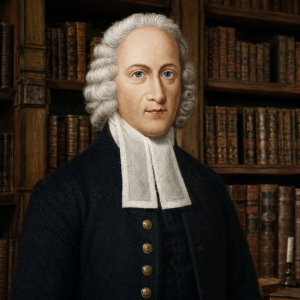
Jonathan Edwards (1703–1758)
was an American pastor, theologian, and gospel preacher whose writings helped shape evangelical Christianity. Best known for Sinners in the Hands of an Angry God, he wrote powerfully on the glory of God, the seriousness of sin, and the need for true conversion.
One cause of the errors that often accompany a great revival of religion is undetected spiritual pride.
This is the main door through which the devil enters the hearts of those who are zealous for the advancement of religion. It is the chief inlet by which smoke from the bottomless pit darkens the mind and misleads the judgement. This is the main handle by which the devil takes hold of religious people, and the chief source of all the mischief he introduces in order to clog, hinder, and obstruct a work of God.
Until this disease is cured, medicines are applied in vain to heal the other diseases. It is by spiritual pride that the mind defends itself in other errors and guards itself against the light by which it might otherwise be corrected and reclaimed. The spiritually proud person already thinks he is full of light. He feels no need of instruction and is ready to despise the offer of it.
But if this disease is healed, other things are easily put right. The humble person is like a little child: he readily receives instruction. He watches carefully over himself, aware of how liable he is to go astray; therefore, if it is suggested that he has gone wrong, he is ready to examine himself closely, honestly, and impartially.
Nothing sets a person so far beyond the devil’s reach as humility. Nothing so prepares the mind for true divine light, free from darkness. Nothing so clears the eye to see things as they truly are. “May He lead the humble in justice, and may He teach the humble His way.” (Ps. 25:9).
Therefore, we should not begin by fighting with lesser matters, but with the chief enemy itself. Our first care should be to set the heart right, and to pull the beam out of our own eye. Then we shall see clearly.
I know that, in our day, many things are very unfairly attributed to the pride of those who are zealous in the cause of God.
When any person appears, in any respect, to be remarkably distinguished in religion from others — if he professes spiritual comforts and joys greater than usual, or appears especially zealous in religion; if he exerts himself more than others in the cause of religion, or seems to be marked out by success — it is very likely that this will immediately awaken the jealousy of those around him.
They will suspect, whether they have cause or not, that he is proud of his goodness, and that he wants others to think no one is as good as he is. All his speech will be heard, and all his behaviour observed, through this prejudice. Those who are themselves cold and dead, and especially those who have never known the power of godliness in their own hearts, are ready to think this way about the best Christians. This arises from a secret enmity against vital and fervent godliness.
But zealous Christians should take great care that this does not become a snare to them, and that the devil does not take advantage of it to blind their eyes to what truly exists in their own hearts. They must not conclude that, because they are wrongly accused of pride in many things, and accused from an evil spirit, therefore every charge must be false. Alas, how much pride there is in the best of us. It is the worst part of the body of sin and death. It was the first sin that ever entered the universe, and it is the last to be rooted out. It is God’s most stubborn enemy.
The corruption of nature may be reduced to two great things: pride and worldly-mindedness; the devil and the beast; self and the world. These are the two pillars of Dagon’s temple, upon which the whole house leans. But the former of these, pride, is in every way the worst part of the corruption of nature. It is the devil’s firstborn son, and his image in the heart of man chiefly consists in it. It is the last thing in a sinner to be overcome by conviction in order to conversion, and here the saint faces his hardest conflict. It is the last thing over which he directly wages war against God, and it is most contrary to the Spirit of the Lamb of God. Pride is most like the devil, its father, in its serpent-like deceitfulness and secrecy. It lies deepest, is most active, and is most ready secretly to mix itself with everything.
Of all kinds of pride, spiritual pride is, in many respects, the most hateful. It is most like the devil. It is most like the sin he committed in a heaven of light and glory, where he was exalted high in divine knowledge, honour, beauty, and happiness.
Pride is much more difficult to discern than any other corruption, because its very nature consists largely in a person having too high an opinion of himself. It is no wonder that the person who thinks too highly of himself does not recognise it. If he truly believed that his opinion of himself had no proper grounds, he would no longer hold that opinion.
Those who are spiritually proud have a high opinion of two things in particular: their light and their humility. Both of these strongly hinder the discovery of their pride. Being proud of their light makes them less suspicious of themselves. The person who thinks clear light shines all around him does not suspect that an unseen enemy may be lurking nearby. And being proud of their humility makes them least suspicious of themselves in that very matter — namely, that they may be under the power of pride.
There are many sins of the heart that are secret in their nature and difficult to discern. The psalmist says, “Who can discern his errors? Acquit me of hidden faults” (Ps. 19:12). But spiritual pride is the most secret of all sins. In nothing is the heart more deceitful and unsearchable than in this matter. There is no sin in the world in which men are so confident of themselves. The very nature of spiritual pride is to produce self-confidence and drive away suspicion of any evil of that kind.
There is no sin so much like the devil as this, in its secrecy and subtlety, and in the many shapes in which it appears unnoticed and unsuspected. It appears as an angel of light. It takes occasion to rise from everything. It perverts and abuses everything — even the exercises of real grace and real humility — as an opportunity to exert itself.
It is a sin that has, as it were, many lives. If you kill it, it still lives. If you mortify and suppress it in one form, it rises in another. If you think it is completely gone, it is still there. There are many kinds of spiritual pride, lying in different forms and shapes, one beneath another, surrounding the heart like the layers of an onion. If you pull off one layer, there is another underneath.
Therefore, we need to keep the greatest possible watch over our hearts in this matter, and to cry most earnestly to the great Searcher of hearts for His help. “He who trusts in his own heart is a fool, But he who walks wisely will escape” (Prov. 28:26).
God’s own people should be all the more watchful over themselves in this matter at the present time, because the temptations many have to this sin are exceedingly great. The great and distinguishing privileges to which God admits many of His saints, and the high honours He places upon some ministers, are great tests of people in this respect.
It is true that great measures of the spiritual presence of God tend powerfully to mortify pride and corruption. Yet, though the experience of such favour does much to restrain pride in one way, it also brings much to tempt and provoke it in another. Without great watchfulness and prayerfulness, we shall be in great danger.
The angels who fell had great honours and high privileges while they were in heaven. They beheld the face of God and viewed His infinite glory, which should have stirred in them humility and kept them from pride. Yet, through lack of watchfulness, their great honour and heavenly privilege became an undoing temptation to pride, even though they had no principle of pride already in their hearts to expose them to it.
Therefore, let no saint, however eminent, and however near to God, think himself out of danger. The one who thinks himself most out of danger is, in reality, most in danger. The apostle Paul, who was doubtless as eminent a saint as any now living, was not out of danger, even just after he had been admitted to see God in the third heaven, as described in 2 Cor. 12. And yet, without doubt, what he saw in heaven of the inexpressible glory of the Divine Being had a direct tendency to make him appear exceedingly little and vile in his own eyes.
Spiritual pride is, by its very nature, so secret that it is not usually best discerned by looking directly at the thing itself, but by its effects and fruits. I will mention some of these, along with the opposite fruits of pure Christian humility.
Spiritual pride disposes people to speak of the sins of others, their enmity against God and His people, the miserable delusion of hypocrites, their opposition to vital godliness, and the deadness of some saints, with bitterness, laughter, levity, or an air of contempt. Pure Christian humility, by contrast, disposes a person either to be silent about such things or to speak of them with grief and pity.
Spiritual pride is very quick to suspect others. A humble saint, however, is most suspicious of himself. There is nothing in the world he distrusts so much as his own heart.
The spiritually proud person is inclined to find fault with other saints because they are low in grace. He is much occupied with observing how cold and dead they are, and he is quick to notice and point out their deficiencies. But the eminently humble Christian has so much to attend to at home, and sees so much evil in his own heart, and is so deeply concerned about it, that he is not eager to be busy with the hearts of others. He complains most of himself. He complains of his own coldness and low measure of grace.
He is inclined to esteem others better than himself, and is ready to hope that there is no one who does not have more love and thankfulness to God than he does. He can hardly bear to think that others should bring forth no more fruit to God’s honour than he does.
Some who have spiritual pride mixed with high discoveries and great transports of joy are disposed, in such frames, to speak earnestly to others, calling upon nearby Christians and sharply reproving them for being so cold and lifeless. There are others who, in their own thoughts, are overwhelmed with a sense of their own vileness. When they receive extraordinary discoveries of God’s glory, they are taken up with their own sinfulness. Though they also may be disposed to speak much and very earnestly, it is largely in blaming themselves and exhorting fellow Christians in a charitable and humble manner.
Pure Christian humility disposes a person to notice everything that is good in others, to make the best of it, and to minimise their failings. But it fixes his eye chiefly on what is bad in himself, and carefully notices everything that aggravates his own sin.
Contrary to this, it has been the habit in some places, or at least of some people, to speak of almost everything they see wrong in others with the harshest, most severe, and most dreadful language. They frequently say that other people’s opinions, conduct, advice, coldness, silence, caution, moderation, prudence, and the like are from the devil or from Hell; that such a thing is devilish, hellish, or cursed; that such people are serving the devil, or that the devil is in them; that they are soul-murderers, and similar expressions. In this way, the words “devil” and “Hell” are almost continually in their mouths.
They commonly use this kind of language not only towards wicked people, but also towards those whom they themselves acknowledge to be true children of God, and even towards ministers of the gospel and others who are far above them. And they regard this as a virtue and a high attainment.
“Oh,” they say, “we must be plain-hearted and bold for Christ. We must declare war against sin wherever we see it. We must not soften the matter in the cause of God, or when speaking for Christ.” They consider it unworthy of a follower of Christ, when speaking in his Master’s cause, to make any distinction between persons, or to speak more tenderly because the fault is seen in a superior.
What a strange device of the devil this is: to overthrow all Christian meekness and gentleness, and even every appearance of it; to defile the mouths of the children of God; and to introduce the language of common sailors among the followers of Christ, all under the cloak of high holiness, zeal, and boldness for Christ.
This is a remarkable instance of the weakness of the human mind, and of how cunning the devil is for us.
The great defence of this way of speaking is that, they say, they are saying nothing more than the truth. They are only speaking plainly and not softening the matter. They argue that true Christians, who have a deep sight of the evil of sin and some acquaintance with their own hearts, know these things to be true, and therefore will not be offended by such harsh expressions concerning themselves and their sins. It is only, they say, hypocrites, or cold and dead Christians, who are provoked and feel their enmity rise on such an occasion.
But it is a great mistake to think that we may commonly use whatever language sets out the worst about one another, simply because it is strictly true. It is indeed true that every kind of sin, and every degree of it, is devilish and from Hell. It is cursed, hellish, and condemned. If people had a full sight of their own hearts, they would think no terms too severe for themselves. They would appear to themselves like beasts, serpents, and devils. They would be at a loss for language strong enough to express what they see in themselves.
But should a child, therefore, repeatedly use such language about an excellent and eminently holy father or mother, saying, “The devil is in them”; that they have such and such devilish and cursed dispositions; that they commit hundreds of hellish and condemned acts every day; and that they are cursed dogs, hell-hounds, and devils? Should the lowest of the people be justified in commonly using such language about the most excellent magistrates or the most eminent ministers? I hope no one has gone to such a height. Yet the same claims of boldness, plain-heartedness, and declared war against sin would justify these things just as much as the others.
If we proceed in this way, on such principles as these, what appearance will soon be introduced into the church of Christ, the little beloved flock of that gentle Shepherd, the Lamb of God? What sound shall we bring into the house of God, into the family of His dear little children? How quickly shall we banish that lovely appearance of humility, sweetness, gentleness, mutual honour, kindness, delight in one another, and esteem of others above ourselves, which ought to clothe the children of God from head to foot.
This does not mean that Christians should not watch over one another, or that they should not faithfully reprove one another when necessary. They should do so plainly and faithfully. But it does not follow that dear brothers and sisters in the family of God, when rebuking one another, should use worse language than Michael the archangel dared to use when rebuking the devil himself.
Christians, who are only fellow-worms, ought at least to treat one another with as much humility and gentleness as Christ, who is infinitely above them, treats them.
How did Christ treat His disciples when they were so cold towards Him and so careless of Him, at the very time when His soul was deeply grieved, even to death? He was in dreadful agony, crying out and sweating blood for them, yet they would not watch with Him or give Him the comfort of their company for even one hour in His great distress, though He asked it of them more than once.
One might think that if there were ever a proper time to rebuke them for devilish, hellish, cursed, and condemned slothfulness and deadness, it was then. But how did Christ reprove them? Behold His astonishing gentleness. He said, “So, you men could not keep watch with Me for one hour? Keep watching and praying that you may not enter into temptation; the spirit is willing, but the flesh is weak” (Matt. 26:40–41).
And how did He treat Peter when Peter was ashamed of his Master, while Christ was being mocked, insulted, and spat upon for him? He looked upon him with a look of love and melted his heart.
It is true that we read of Christ once turning and saying to Peter, “Get behind Me, Satan!” (Matt. 16:23). This may seem to be an instance of harshness and severity in reproving Peter. Yet I humbly think many misunderstand this. It was not, in fact, an example of Christ’s severity towards Peter, but rather of His wonderful gentleness and grace. Christ distinguished between Peter and the devil working in him. He did not lay the blame of what Peter had said upon Peter himself, or impute it to him in the fullest sense, but to the devil who was influencing him.
Christ saw that the devil was then present, secretly influencing Peter to act as a tempter to his Master. Therefore, Christ turned towards Peter, in whom the devil was then working, and spoke to the devil, rebuking him. Thus the grace of Christ does not look upon iniquity in His people in order to condemn them. He does not impute what is amiss in them to them as their final identity, but lays it upon the sin that dwells in them, and upon Satan who influences them.
Spiritual pride often leads people to be unusual in their outward appearance, to affect an unusual way of speaking, to use a different kind of language from others, or to be distinctive in voice, expression, or behaviour. But the eminently humble Christian, though he will be faithful to his duty however singular that duty may make him, and will walk alone in the way that leads to heaven even if all the world forsakes him, does not delight in being different merely for the sake of being different.
He does not try to set himself up to be viewed and noticed as someone distinguished, as though he desired to be considered better than others, despising their company or refusing to conform to them. On the contrary, he is disposed to become all things to all men, to yield to others, to conform to them, and to please them in everything except sin.
Spiritual pride commonly produces a certain stiffness and inflexibility in people regarding their own judgement and their own ways. But the eminently humble person, though he is inflexible in matters of duty and in things that concern God’s honour, and though he will not yield in the least degree when tempted to anything he judges to be sinful, but is like a wall of bronze, is nevertheless pliable in other things. He is not disposed to set up his own opinion or his own will. He is ready to give due respect to the opinions of others, loves to comply with their inclinations, and has a heart that is tender and flexible, like that of a little child.
Spiritual pride disposes people to affect separation, to stand at a distance from others as though they are better than they are, and to love the appearance and display of that distinction. But, on the contrary, the eminently humble Christian is ready to think himself unworthy that others should be united to him. He thinks himself more brutish than any man, and unworthy of the society of God’s children.
Though he will not be a companion of one who is visibly Christ’s enemy, and though he delights most in the company of lively Christians, choosing such people as his companions and being most intimate with them, and though he does not delight to spend much time in the company of those who seem to enjoy no conversation except worldly things, yet he does not love the appearance of an open separation from visible Christians. He does not wish to appear as though he belongs to a distinct company from those who, by Christ’s appointment, are one visible company with him.
As much as possible, he avoids every appearance of superiority or of distinguishing himself as better than others. His universal benevolence delights in the appearance of union with his fellow creatures, and he will maintain it as far as he can without openly approving iniquity or wounding his own soul. In this, he follows the example of his meek and lowly Redeemer, who did not maintain the same kind of separation and distance as the Pharisees, but freely ate with tax collectors and sinners so that He might win them.
The eminently humble Christian is, as it were, clothed with lowliness, mildness, meekness, gentleness of spirit and behaviour, and with a soft, sweet, condescending, winning manner and bearing. These things are like garments to him; he is clothed all over with them. “all of you, clothe yourselves with humility toward one another” (1 Pet. 5:5). “So, as the elect of God, holy and beloved, put on a heart of compassion, kindness, humility, gentleness and patience” (Col. 3:12).
Pure Christian humility has nothing of roughness, contempt, fierceness, or bitterness in its nature. It makes a person like a little child, harmless and innocent, so that no one needs to be afraid of him; or like a lamb, free from all bitterness, wrath, anger, and clamour, according to Eph. 4:31: “Let all bitterness and anger and wrath and shouting and slander be put away from you, along with all malice.”
Zealous ministers of the gospel, and those whom God is pleased to use as instruments in His hands for the advancement of His work, especially ought to be clothed with such a spirit. They ought indeed to be thorough in preaching the Word of God, without softening the matter at all. In handling the sword of the Spirit, as ministers of the Lord of hosts, they should not be mild and gentle with sin. They are not to be gentle and moderate in searching and awakening the conscience, but should be sons of thunder.
The Word of God, which is itself sharper than any two-edged sword, ought not to be sheathed by its ministers. It should be used so that its sharp edges have their full effect, even to the dividing of soul and spirit, joints and marrow. Yet ministers should do this without judging particular persons, leaving it to conscience and to the Spirit of God to make the particular application.
All their conversation and conduct should savour of nothing but lowliness and goodwill, love and pity towards all mankind, so that such a spirit is like a sweet fragrance diffused around them wherever they go. They should be like lions to guilty consciences, but like lambs towards men’s persons.
This would have no tendency to prevent the awakening of men’s consciences. On the contrary, it would have a very great tendency to awaken them. It would make way for the sharp sword to enter. It would remove obstacles and lay the breast bare for the arrow. Indeed, the amiable, Christlike conduct of such ministers would itself terrify the consciences of men, as well as their terrible preaching. Both would work together to subdue the hard heart and bring down the proud heart.
If such behaviour had been constantly and universally seen in travelling preachers, it would have terrified the consciences of sinners ten times more than all the harsh attacks and censorious talk there has been concerning particular persons — about their opposition, hypocrisy, delusion, Pharisaism, and the like.
Such things have generally made sinners’ consciences more dull. They seize upon them and use them as a shield to defend themselves from the sharp arrows of the Word shot by these preachers. The enemies of the present work have been glad of these things with all their hearts. Many of the most bitter among them are probably people whose consciences, at the beginning of this work, were somewhat wounded and terrified by it. But these errors of awakening preachers are the very things they chiefly use as plasters to heal the sore that had been made in their consciences.
Spiritual pride takes great notice of opposition and injuries received. It is inclined to speak often about them, and to dwell much on how serious they are, either with bitterness or with contempt. But pure and unmixed Christian humility disposes a person to be more like his blessed Lord: when reviled, silent, not opening his mouth, but quietly committing himself to Him who judges righteously.
The eminently humble Christian, the more noisy and furious the world becomes against him, the more silent and still he will be — except in his private prayers, and there he will not be silent. Our blessed Lord Jesus seems never to have been so silent as when the world surrounded Him, reproaching Him, striking Him, spitting upon Him, crying out against Him with loud and bitter accusations, and treating Him with dreadful cruelty.
There has recently been far too much talk among many true and zealous friends of religion about opposition and persecution. When the world is in an uproar about the followers of the Lamb of God, and full of noise against them, it does not become them to raise another noise in answer, but to be still and quiet. It is not beautiful, at such a time, for pulpits and conversations to ring continually with the sound of “persecution, persecution,” or with abundant talk about Pharisees, carnal persecutors, and the seed of the serpent.
Meekness and quietness among God’s people, when they are opposed and reviled, would be the surest way to have God appear remarkably in their defence. It is particularly observed of Moses, when Aaron and Miriam envied him and rose up in opposition against him, that “the man Moses was very humble, more than any man who was on the face of the earth” (Num. 12:3). No doubt this is recorded because he showed remarkable meekness on that occasion, remaining completely silent under the abuse. And how remarkable is the account that follows, of God being, as it were, suddenly roused to appear for his vindication. What high honour He placed upon Moses, and how severe were His rebukes of those who opposed him. The account is very striking, and worthy of everyone’s careful attention.
Nothing is so effective in bringing God down from heaven in defence of His people as their patience and meekness under suffering. When Christ “girds His sword on His thigh” with His glory and majesty, and in His majesty rides prosperously, His right hand teaching Him awesome things, it is “for the cause of truth and meekness and righteousness” (Ps. 45:3–4). “You made Your cause to be heard from heaven; The earth feared and was quiet When God arose to judgment, to save all the humble of the earth” (Ps. 76:8–9). “Yahweh helps up the afflicted; He brings down the wicked to the ground.” (Ps. 147:6). “But with righteousness He will judge the poor, and decide with uprightness for the afflicted of the earth; And He will strike the earth with the rod of His mouth, and with the breath of His lips He will put the wicked to death” (Isa. 11:4).
The great commendation Christ gives to the church in Philadelphia is this: “You have kept the word of My perseverance” (Rev. 3:10). And we may see what reward He promises her in the preceding verse: “Behold, I am giving up those of the synagogue of Satan, those who say that they are Jews and are not, but lie. Behold, I will make them come and bow down before your feet, and make them know that I have loved you.” (Rev. 3:9).
This is how we might expect Christ to appear for us, if, under all the reproaches laid upon us, we behaved with lamb-like meekness and gentleness. But if our spirits rise, and we become vehement and noisy with our complaints under the appearance of Christian zeal, this will be to take our own defence into our own hands. God will then leave it to us to vindicate our cause as well as we can. Indeed, if we continue in a way of bitterness and severe censoring, this will be the way to have Him rebuke us and put us to shame before our enemies.
Here some may be ready to say, “It is not in our own cause that we are so vehement, but in the cause of God. The apostle directed the early Christians to contend earnestly for the faith once delivered to the saints.” But how did the early Christians contend earnestly for the faith? They defended the truth with arguments and with holy conduct, yet they gave their reasons with meekness and fear. They contended earnestly for the faith by fighting violently against their own unbelief and the corruptions of their own hearts. Yes, they resisted to the point of shedding blood in their striving against sin; but the blood shed in that earnest conflict was their own blood, not the blood of their enemies.
It was in the cause of God that Peter was so fierce, drew his sword, and began to strike with it. But Christ commanded him to put his sword back, telling him that “all those who take up the sword shall perish by the sword” (Matt. 26:52). And while Peter wounds, Christ heals.
Those contend most powerfully, and are the greatest conquerors in a time of persecution, who bear it with the greatest meekness and patience. Great humility even uses the accusations and reproaches of enemies as an occasion for serious self-examination, asking whether there may not be some just cause for them, and whether in some respect they have not given the enemy occasion to speak reproachfully.
Spiritual pride, by contrast, uses such accusations to become even more bold and confident, and to go even further in the very thing for which it is blamed. I ask that it may be considered whether there has not been something wrong lately among the true friends of vital godliness in this respect. And whether the words of David, when reviled by Michal, have not been misinterpreted and misapplied to justify them in it, when he said, “I will be esteemed even more lightly than this and will be humble in my own eyes” (2 Sam. 6:22).
The meaning of David’s words is that he would humble himself still more before God, being conscious that he was far from being sufficiently humbled. He indicates this to Michal: that he longed to be lower still, and had already intended to humble himself more in his behaviour. He did not mean that he would go to greater lengths simply to show how little he cared about her reviling. That would have been to exalt himself, not to humble himself and become more vile in his own eyes.
Another effect of spiritual pride is a certain unsuitable and self-confident boldness before God and men. In this way, some, in their great rejoicings before God, have not paid sufficient regard to the rule in Ps. 2:11: “Serve Yahweh with fear and rejoice with trembling.”
They have not rejoiced with reverent trembling, with a proper sense of the awful majesty of God and the vast distance between Him and themselves.
There has also been an improper boldness before men, which has been encouraged and defended by misapplying Prov. 29:25: “Trembling before man brings a snare, but he who trusts in Yahweh will be set securely on high.”
Some have spoken as though it became all people — high and low, men, women, and children — in all religious conversation, to cast off every kind of modesty, restraint, or reverence towards man. But this is a great error, and quite contrary to Scripture.
There is a reverent fear that is due to some men: “Render to all what is due them: tax to whom tax is due; custom to whom custom; fear to whom fear; honour to whom honour” (Rom. 13:7). There is also a modest and respectful fear which is proper in those under authority towards those over them. This is lovely and required by Christian rule: “As they observe your pure conduct with fear” (1 Pet. 3:2). Likewise, “Women are to adorn themselves with proper clothing, with modesty and self-restraint” (1 Tim. 2:9).
The apostle means that this virtue should have a place not only in ordinary conversation, but also in spiritual conversation and in our religious conduct. This is evident from what follows: “A woman must learn in quietness, in all submission. But I do not allow a woman to teach or exercise authority over a man, but to remain quiet” (1 Tim. 2:11–12).
I do not infer from this that women’s mouths should be shut from Christian conversation. All I mean here is that modesty, restraint, and reverence towards others ought to have some place even in our religious communication with one another.
The same is also evident from 1 Pet. 3:15: “Sanctify Christ as Lord in your hearts, always being ready to make a defence to everyone who asks you to give an account for the hope that is in you, yet with gentleness and fear.” It would be well to consider whether that very fear and modesty which the apostle commends has not sometimes been condemned under the name of a cursed fear of man.
It is beautiful for those who lead others in prayer to make God alone their fear and their dread, and to be wholly forgetful of the people present, who, whether great or small, are nothing in the presence of the great God. It is also beautiful for a minister, when he speaks in the name of the Lord of hosts, to be bold and to put off all fear of men. And it is beautiful for private Christians, even women and children, to be bold in professing the faith of Christ, in the practice of all religion, and in acknowledging God in the work of His power and grace, without any fear of men — even if they are reproached as fools or mad, frowned upon by great men, and cast off by parents and by all the world.
Another effect of spiritual pride is that it makes the person affected by it assuming. It often makes people act and speak as though it especially belonged to them to be noticed and highly regarded. It is very natural for someone much under the influence of spiritual pride to receive all the respect paid to him without hesitation. If others show a disposition to submit to him and to give him the deference due to a teacher, he is open to it and freely accepts it. Indeed, it is natural for him to expect such treatment, to notice greatly when he does not receive it, and to think poorly of those who do not pay him what he regards as his due.
He is inclined to think that it belongs to him to speak, to clothe himself with a judging and dogmatic air in conversation, and to take it upon himself, as though it were his right, to pronounce sentence, determine, and decide.
Pure Christian humility, however, does not boast. It does not behave unbecomingly, but is inclined to prefer others in honour. One under the influence of spiritual pride is more inclined to instruct others than to seek instruction for himself, and he naturally takes on the manner of a master. But one who is full of pure humility naturally carries the spirit of a disciple. His voice is, “What shall I do? What shall I do, that I may live more to God’s honour? What shall I do with this wicked heart?” He is ready to receive instruction from anyone, in keeping with Jas. 1:19: “Know this, my beloved brothers. But everyone must be quick to hear, slow to speak and slow to anger.”
The eminently humble Christian thinks he needs help from everyone, whereas the spiritually proud person thinks everyone needs help from him. Christian humility, when it sees the misery of others, pleads and beseeches. Spiritual pride, by contrast, loves to command and warn with authority.
There ought, therefore, to be the utmost watchfulness against all such appearances of spiritual pride in all who profess to have been the subjects of this work, and especially in the promoters of it — but above all in travelling preachers. The most eminent gifts, and the highest tokens of God’s favour and blessing, will not excuse them.
Alas, what is man at his best estate? What is even the most highly favoured Christian, or the most eminent and successful minister, that he should now think he is sufficient for anything, or someone to be highly regarded? What is he, that he should go out and act among his fellow creatures as though he were wise, strong, and good?
Ministers who have been the principal instruments in carrying forward this glorious revival of religion, and whom God has used to bring His people, as it were, out of Egypt, should take great care that they do not provoke God as Moses did. They must beware of assuming too much to themselves, and of allowing intemperate zeal to shut them out from seeing the good things God is about to do for His church in this world.
The fruits of Moses’ unbelief, which provoked God to shut him out of Canaan and not allow him to partake in those great things He was about to do for Israel, were chiefly these two.
First, he mingled bitterness with his zeal. He had great zeal for God, and he could not bear to see the intolerable stiff-neckedness of the people. They would not acknowledge the work of God, nor be convinced by all the wonders they had seen. But human passion was mixed with his zeal: “They also provoked Him to wrath at the waters of Meribah, so that it went badly with Moses on their account; Because they were rebellious against His Spirit, He spoke rashly with his lips” (Ps. 106:32–33). “Hear now, you rebels,” he said, with bitterness of language.
Second, he behaved and spoke with an assuming spirit. He took too much upon himself: “Hear now, you rebels; shall we bring water for you out of this rock?” Spiritual pride was at work in Moses at that time. His temptations to it were very great, for he had received great discoveries of God, had been privileged with intimate and sweet communion with Him, and God had made him an instrument of great good to His church. Yet though he was so humble a man, and, by God’s own testimony, meeker than all the men on the face of the earth, his temptations were too strong for him.
Surely this should make our young ministers, who have recently been highly favoured and greatly blessed with success, exceedingly careful and distrustful of themselves. Alas, how far we are from having the strength of holy, meek, aged Moses.
The temptation in this day is exceedingly great towards both errors of which Moses was guilty. There is a great temptation to mingle bitterness and corrupt passion with zeal, because there is so much unreasonable opposition against this glorious work of God, and so much stiff-neckedness shown by multitudes in this generation. This is so even after all the great and wonderful works by which God has passed before them. Such opposition greatly tends to provoke the spirits of those who have the interest of this work at heart, so that they are moved to speak rashly with their lips.
There is also a great temptation in some people to an assuming manner. When a minister is greatly blessed with success from time to time, and so draws the eyes of the multitude upon himself; when he sees himself followed, sought out as an oracle, and people ready to admire him, and, as it were, to offer sacrifice to him, as happened with Paul and Barnabas at Lystra, it is almost impossible for a man to avoid taking on the airs of a master, or of some extraordinary person. A man needs a great stock of humility, and much divine assistance, to resist such a temptation.
But the greater our dangers are, the greater our watchfulness, prayerfulness, and distrust of ourselves ought to be, lest we bring ourselves into mischief. Fishermen who have been very successful, and have caught a great many fish, need to be careful that they do not at last begin to burn incense to their net.
We should also take warning from Gideon. After God had highly favoured and exalted him, and made him the instrument of working a wonderful deliverance for His people, he eventually made an idol from the spoils of his enemies. It became a snare to him and to his house, and proved to be the ruin of his family.
All young ministers, in this day of bringing up the ark of God, should take warning from the example of a young Levite in Israel, Uzzah the son of Abinadab. He seemed to have a real concern for the ark of God, and to be zealous and engaged in his mind on that joyful occasion of bringing it up. God made him an instrument in bringing the ark out of its long obscurity in Kiriath-jearim, and he succeeded in bringing it a considerable way towards Mount Zion. But because of his lack of humility, reverence, and carefulness, and because he assumed too much and took too much upon himself, God broke out against him and struck him for his error. He did not live to see or share in the great joy of God’s church when the ark was brought up to Mount Zion, nor in the great blessings of heaven that followed upon Israel.
The ministers employed in carrying on this work have chiefly been younger men. No doubt they have, as Uzzah had, a real concern for the ark. It is also evident that they are much stirred and engaged in their minds, as he was, in this joyful day of bringing up the ark. They are afraid of what may become of the ark under the conduct of its ministers. They see it shaking, and they fear that these blundering oxen will throw it down.
It is to be feared that some of them have been over-officious on this occasion. They have assumed too much to themselves and have been bold to put out their hand to take hold of the ark, as though they were the only fit and worthy persons to defend it.
If young ministers had great humility, without a corrupt mixture, it would especially dispose them to treat aged ministers with respect and reverence, as fathers, even if a sovereign God has given the younger men greater assistance and success. “You younger men, likewise, be subject to your elders; and all of you, clothe yourselves with humility toward one another, for God is opposed to the proud, but gives grace to the humble” (1 Pet. 5:5). “You shall rise up before the greyheaded and honour the aged, and you shall fear your God; I am Yahweh” (Lev. 19:32).
As spiritual pride disposes people to assume much to themselves, so it also disposes them to treat others with neglect. By contrast, pure Christian humility disposes people to honour all men, according to the rule: “Honor all people, love the brethren, fear God, honor the king.” (1 Pet. 2:17).
There has been, in some whom I believe to be true friends of religion, too great an appearance of this fruit of spiritual pride in the way they have treated those whom they regarded as carnal men. This has appeared particularly in their refusal to enter into any conversation or reasoning with them.
It is true that spending a great deal of time in quarrelling and heated debates about religion is not the way to advance it, but to hinder it. Some are so dreadfully set against this work that it is a miserable task to dispute with them; all that can be said is utterly in vain. I have found this to be so by experience. There are also times when entering into religious disputes is quite unsuitable, especially in meetings for spiritual conference or acts of worship.
Yet we ought to be very careful that we do not refuse to speak with people in a way that appears proud and dismissive, as though we considered them unworthy of notice. On the contrary, we should condescend to carnal men, as Christ has condescended to us, bearing with our unteachableness and dullness. He still follows us with instruction, line upon line and precept upon precept, saying, “Come now, and let us reason together” (Isa. 1:18). He sets light before us, uses all kinds of arguments with us, and waits upon such dull learners, as though hoping we may yet receive light.
We should therefore be ready, with meekness and calmness, and without heated disputing, to give our reasons to carnal men when they ask us why we believe this work is the work of God. We should not turn them away as though they are not worth speaking to. This is what the apostle directed the early Christians to do, when he told them to be ready to give a reason for the Christian faith and hope even to the enemies of Christianity: “Sanctify Christ as Lord in your hearts, always being ready to make a defence to everyone who asks you to give an account for the hope that is in you, yet with gentleness and fear” (1 Pet. 3:15).
Nor ought we to condemn all reasoning about religious matters under the name of carnal reason. For my part, I desire nothing better than that those who oppose this work would fairly submit to have the matter between us tested by strict reasoning.
Reflection Questions
- How can pride hide beneath boldness, confidence, or concern for truth?
- What is the difference between faithful correction and harsh, proud speech?
- Why should Christians be more suspicious of their own hearts than of others?
- How does true humility affect the way we respond to opposition or criticism?
- Why can spiritual success or usefulness become a temptation to pride?
- What does Christ’s gentleness teach us about how to treat other believers?
- How can we contend for truth without losing meekness?

Has this article encouraged or helped you?
Exposit the Word is a reader-supported ministry dedicated to proclaiming God’s Word faithfully and freely. If you have been blessed by this ministry and would like to help us continue producing biblical resources, please consider supporting us here.