

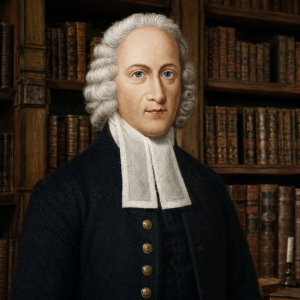
Jonathan Edwards (1703–1758)
was an American pastor, theologian, and gospel preacher whose writings helped shape evangelical Christianity. Best known for Sinners in the Hands of an Angry God, he wrote powerfully on the glory of God, the seriousness of sin, and the need for true conversion.
“But to those who are selfishly ambitious and do not obey the truth, but obey unrighteousness, wrath and anger. There will be affliction and turmoil for every soul of man who works out evil, of the Jew first and also of the Greek.”
(Rom. 2:8–9)
The apostle’s aim in the first three chapters of this epistle is to show that both Jews and Gentiles are under sin, and therefore cannot be justified by works of law, but only by faith in Christ. In the first chapter, he has shown that the Gentiles are under sin. In this chapter, he shows that the Jews also are under sin. However severe they were in their judgements upon the Gentiles, they themselves practised the very same things, and for this the apostle greatly reproves them.
“Therefore you are without excuse, O man, everyone who passes judgment, for in that which you judge another, you condemn yourself; for you who judge practice the same things.” (Rom. 2:1).
He warns them not to continue in such a way by setting before them the misery to which they expose themselves. He also gives them to understand that, instead of their misery being less than that of the Gentiles, it would be greater, because God had shown them distinguishing goodness above the Gentiles.
The Jews thought they would be exempt from future wrath because God had chosen them to be His peculiar people. But the apostle informs them that outside of Christ there will be indignation and wrath, tribulation and anguish, upon every soul of man who does evil — not only upon the Gentile, but upon the Jew first and chiefly, because his sins are more aggravated.
In our text we find the following.
- A Description of Wicked Men
In this description, we may observe two kinds of qualifications: those which have the nature of a cause, and those which have the nature of an effect.
The qualifications of wicked men here mentioned that have the nature of a cause are these: they are contentious, they do not obey the truth, and they obey unrighteousness.
By their being contentious is meant that they are contentious against the truth. They quarrel with the gospel. They find fault with its declarations and its offers. Unbelievers find many things in the ways of God at which they stumble and by which they are offended. They are always quarrelling and finding fault with one thing or another, and by this they are kept from believing the truth and yielding to it. Christ is to them a stone of stumbling and a rock of offence.
They do not obey the truth. That is, they do not yield to it. They do not receive it with faith. That yielding to the truth and embracing of it which belongs to saving faith is called obedience in Scripture. “But thanks be to God that though you were slaves of sin, you obeyed from the heart that pattern of teaching to which you were given over” (Rom. 6:17). Again, speaking of Christ, Scripture says, “And having been made perfect, He became to all those who obey Him the source of eternal salvation” (Heb. 5:9). And again, “through whom we received grace and apostleship for the obedience of faith among all the Gentiles for the sake of His name” (Rom. 1:5).
But instead of yielding to the gospel, they obey unrighteousness. They are under the power and dominion of sin, and are slaves to their lusts and corruptions.
It is in these qualifications of wicked men that their wickedness radically consists. Their unbelief and opposition to the truth, and their slavish subjection to lust, are the foundation of all wickedness.
The qualifications of wicked men which have the nature of an effect are seen in this: they do evil. This is the result of their opposition to the gospel and of their slavish subjection to their lusts. These wicked principles are the foundation, and their wicked practice is the structure built upon it. These are the root, and this is the fruit.
We may also notice, in the punishment of wicked men, both the cause and the effect.
Those things mentioned in their punishment which have the nature of a cause are indignation and wrath; that is, the indignation and wrath of God. It is the anger of God that will make wicked men miserable. They will be the subjects of divine wrath, and from this their whole punishment will arise.
Those things in their punishment which have the nature of an effect are tribulation and anguish. Indignation and wrath in God will produce in them extreme sorrow, trouble, and anguish of heart.
Every person must receive the portion that belongs to him. God allots to each one his portion. The portion of the wicked is nothing but wrath, distress, and anguish of soul. Though they may enjoy a few empty and vain pleasures for a few days while they remain in this world, yet that which has been allotted to them by the Possessor and Governor of all things as their portion is only indignation and wrath, tribulation and anguish.
This is not the portion wicked men choose for themselves. The portion they choose is worldly happiness. Yet this is the portion God carves out for them. Indeed, it is also the portion they, in effect, choose for themselves, because they choose those things which naturally and necessarily lead to it — things they have been plainly told, time after time, will end in it. “He who sins against me does violence to his own soul; All those who hate me love death” (Prov. 8:36).
But whether they choose it or not, this will and must be the eternal portion of all who live and die as wicked men. Indignation and wrath shall pursue them as long as they live in this world. It shall drive them out of the world, and follow them into another world. There, wrath and misery shall remain upon them throughout eternity.
The method I shall take in treating this subject is to describe the wrath and misery to which wicked men shall be subject, both here and hereafter, in the successive parts and periods of it, according to the order of time.
I shall first describe the wrath that often pursues wicked men in this life. Indignation and wrath often begin with them here.
God often leaves them to themselves
First, God often, in wrath, leaves wicked men to themselves. They are left in their sins, left to undo themselves, and left to work out their own ruin. He lets them alone in sin. “Ephraim is joined to idols; Let him alone” (Hos. 4:17).
God often leaves them to go to great lengths in sin, and does not grant them that restraining grace which He grants to others. He leaves them to their own blindness, so that they remain ignorant of God and Christ, and of the things that belong to their peace.
They are sometimes left to hardness of heart, to be dull and senseless, so that nothing ever thoroughly awakens them. They are left to the lusts of their own hearts, to continue in some wicked practices all their days. Some are left to their covetousness, some to drunkenness, some to immorality, some to a proud, contentious, and envious spirit, and some to a spirit of finding fault and quarrelling with God.
God leaves them to their folly, so that they act exceedingly foolishly. They delay and put off the concerns of their souls from time to time. They never think the present time is the best time, but always keep the matter at a distance. They foolishly continue flattering themselves with hopes of long life. They put far away the coming day, bless themselves in their hearts, and say, “I have peace though I walk in the stubbornness of my heart” (Deut. 29:19).
Some are so left that they remain miserably hardened and senseless, even when others all around them are awakened, deeply concerned, and asking what they must do to be saved.
Sometimes God leaves men to a fatal backsliding because they have misused the strivings of His Spirit. They are let alone, to backslide continually. Dreadful is the life and condition of those who are thus left by God. We have examples of the misery of such people in God’s holy Word, particularly Saul and Judas.
Such people are sometimes greatly left to the power of Satan, to be tempted by him, hurried onward in wicked courses, and led to greatly aggravate their own guilt and misery.
Second, indignation and wrath are sometimes exercised towards wicked men in this world by their being cursed in all that concerns them. The curse of God follows them in everything.
They are cursed in all their enjoyments. If they are prosperous, their prosperity is cursed to them. If they possess riches, if they have honour, if they enjoy pleasure, the curse of God attends it. “when the wicked flourished like grass and all the workers of iniquity blossomed, It was only that they might be destroyed forevermore.” (Ps. 92:7).
There is a curse of God that attends even their ordinary food — every morsel of bread they eat and every drop of water they drink. “May their table before them become a snare; And when they are in peace, may it become a trap” (Ps. 69:22).
They are cursed in all their employments, in whatever they put their hands to, whether they go into the field to labour or work at their various trades. “Cursed shall you be in the city, and cursed shall you be in the field” (Deut. 28:16).
The curse of God remains in the houses where they dwell, and brimstone is scattered on their habitations. As Job says, “There dwells in his tent nothing of his; Brimstone is scattered on his abode.” (Job 18:15).
The curse of God attends them also in the afflictions they meet with. The afflictions that good men meet with are fatherly corrections and are sent in mercy. But the afflictions wicked men meet with are in wrath. They come from God as an enemy and are a foretaste of their everlasting punishment.
The curse of God also attends their spiritual enjoyments and opportunities. It would have been better for them not to have been born in a land of light. Their possession of the Bible and the Sabbath only aggravates their guilt and misery. The Word of God, when preached to them, is a fragrance from death to death. It would have been better for them if Christ had never come into the world, and if there had never been any offer of a Saviour.
Life itself is a curse to them. They live only to fill up the measure of their sins. What they seek in all the enjoyments, employments, and concerns of life is their own happiness, but they never obtain it. They never obtain any true comfort. All the comforts they have are worthless and unsatisfying. If they lived a hundred years with ever so much of the world in their possession, their life would still be filled with vanity. All that they have is vanity of vanities.
They find no true rest for their souls. They only feed on the east wind. They have no real contentment. Whatever outward pleasures they may have, their souls are starving. They have no true peace of conscience and nothing of the favour of God.
Whatever they do, they live in vain and to no purpose. They are useless in the creation of God, for they do not answer the end of their being. They live without God and have neither the presence of God nor any communion with Him. On the contrary, all that they have and all that they do only contributes to their own misery and makes their future and everlasting state more dreadful.
The best of wicked men live miserable and wretched lives, even with all their prosperity. Their lives are most undesirable, and whatever they possess, the wrath of God abides upon them.
Third, after a time, wicked men must die. “This is an evil in all that is done under the sun, that there is one fate for all. Furthermore, the hearts of the sons of men are full of evil, and madness is in their hearts throughout their lives. Afterwards they go to the dead.” (Eccl. 9:3).
Death is a very different thing when it comes to wicked men from what it is when it comes to good men. To the wicked, death comes in execution of the curse of the law and of the wrath of God. When a wicked man dies, God cuts him off in wrath. He is taken away as by a tempest of wrath. He is driven away in his wickedness. “The wicked is thrust down by his own evil, But the righteous takes refuge even in his death” (Prov. 14:32). Job says, “He is driven from light into darkness, and chased from the inhabited world” (Job 18:18). Again, “The east wind carries him away, and he goes, and it whirls him away from his place.” (Job 27:21).
Though wicked men may live in worldly prosperity while they are here, they cannot live here always. They must die. The place that knew them shall know them no more, and the eye that has seen them shall see them no more in the land of the living.
Their bounds are unchangeably set, and when they reach those bounds, they must go. They must leave behind all their worldly good things. If they have lived in outward glory, their glory will not descend after them. They gain nothing while they live that they can carry away. “As he had come naked from his mother’s womb, so will he return as he came. He will carry nothing from the fruit of his labor that he can bring in his hand.” (Eccl. 5:15).
He must leave all his substance to others. If they are at ease and quiet, death will put an end to their quietness. It will spoil all their carnal pleasures and strip them of all their glory. As they came naked into the world, so naked they must return and go as they came.
If they have laid up many goods for many years, if they have stored up what they hope will bring them great comfort and pleasure, death will cut them off from it all. “And He told them a parable, saying, “The land of a rich man was very productive. And he began reasoning to himself, saying, ‘What shall I do, since I have no place to store my crops?’ Then he said, ‘This is what I will do: I will tear down my barns and build larger ones, and there I will store all my grain and my goods. And I will say to my soul, “Soul, you have many goods laid up for many years to come; take your ease, eat, drink and be merry.”’ But God said to him, ‘You fool! This very night your soul is required of you; and now who will own what you prepared?’?” (Luke 12:16–20).
If they have many designs and projects in their hearts for promoting their outward prosperity and worldly advantage, when death comes, it cuts them all off at one blow. “His spirit departs, he returns to the earth; In that very day his plans perish” (Ps. 146:4). Whatever diligence they may have shown in seeking their own salvation, death will disappoint all such diligence. It will not wait for them to accomplish their designs or fulfil their schemes.
If they have pleased, pampered, and adorned their bodies, death will spoil all their pleasure and glory. It will change their faces into a pale and ghastly appearance. Instead of cheerful clothing and beautiful ornaments, they shall have only a winding-sheet. Their home must be the dark and silent grave. That body which they idolised shall turn to loathsome decay, be eaten by worms, and return to dust.
Some wicked men die in youth. Wrath pursues them and soon overtakes them. They are not allowed to live out half their days. “They die in youth, and their life perishes among the cult prostitutes” (Job 36:14). “But You, O God, will bring them down to the pit of corruption; Men of bloodshed and deceit will not live out half their days. But I will trust in You.” (Ps. 55:23).
They are sometimes overtaken in the very midst of their sin and vanity, and death puts a sudden end to all their youthful pleasures. They are often stopped in the middle of their course in sin; and then, however firmly their hearts cling to those things, they must be torn away from them. They have no good but outward good, and then they must eternally forsake it. They must close their eyes forever on all that has been dear and pleasant to them here.
Fourth, wicked men are often the subjects of much tribulation and anguish of heart on their deathbeds. Sometimes the pains of the body are extremely dreadful. What they endure in those agonies and struggles for life, after they are past speaking, and when body and soul are being torn apart, no one can know.
Hezekiah had an awful sense of this. He compares it to a lion breaking all his bones: “Like a shepherd’s tent my dwelling is pulled up and removed from me; As a weaver I rolled up my life. He cuts me off from the loom; From day until night You make an end of me. I soothed my soul until morning. Like a lion—so He shatters all my bones; From day until night You make an end of me.” (Isa. 38:12–13).
But this is little compared with what wicked men sometimes undergo in their souls when they are on their deathbeds. Death sometimes appears to them with an exceedingly terrible aspect. When it comes and stares them in the face, they cannot bear to behold it. It is always so if wicked men have notice of the approach of death, and if reason and conscience are active, and they are not either senseless or distracted.
When this king of terrors comes to show himself to them, and they are called out to meet him, oh, how they dread the conflict. But meet him they must. “No man who has power to restrain the wind with the wind, and there is none who has power over the day of death; and there is no discharge in the time of war, and wickedness will not provide escape to its masters.” (Eccl. 8:8).
Death comes to them with all its dreadful armour, and with its sting not taken away. This is enough to fill their souls with torment beyond expression. It is an awful thing for a person to lie on a sickbed, given over by physicians, with friends standing weeping around the bed, expecting to part from him — and in such circumstances to have no hope, to be without any saving interest in Christ, and to have the guilt of his sins lying upon his soul.
It is awful to be going out of the world without peace being made with God; to be about to stand before His holy judgement-seat in all one’s sins, with nothing to plead and no answer to give; to see the only opportunity to prepare for eternity coming immediately to an end, after which there will be no more time of probation. His case will then be unchangeably fixed, and there will never be another offer of a Saviour.
How dreadful for the soul to come to the very edge of the boundless gulf of eternity, and insensibly launch out into it, without any God or Saviour to care for it; to be brought to the edge of the precipice, to see itself falling down into the lake of fire and brimstone, and to feel that it has no power to stop itself.
Who can tell the shrinking and misgivings of heart in such a case? How he tries to hang back, and yet he must go on. It is vain to wish for further opportunity. Oh, how happy he thinks those are who stand around him, who may yet live and have their lives continued longer, while he must go immediately into endless eternity. How he wishes it might be with him as with those who still have more time to prepare for their trial. But it cannot be so. Death, sent on purpose to summon him, will give him no release and no delay. He must go before the holy judgement-seat of God as he is, to have his everlasting state determined according to his works.
To such people, how differently things appear from the way they appeared in the time of health, when death seemed far away. How differently sin looks to them now — those sins which they once made light of. How dreadful it is now to look back and consider how they have spent their time; how foolish they have been; how they have gratified and indulged their lusts; how they have lived in ways of wickedness; how careless they have been; how they have neglected their opportunities and advantages; how they have refused to listen to counsel; and how they have not repented, in spite of all the warnings given to them.
“And you groan at your end, When your flesh and your body are consumed; and you say, “How I have hated discipline! and my heart spurned reproof! I have not listened to the voice of my instructors, and I have not inclined my ear to my teachers!” (Prov. 5:11–13).
How differently the world appears to them now. They once valued it highly and had their hearts taken up with it, but what can it do for them now? How insignificant all their riches are. “Wealth will not profit in the day of wrath, but righteousness will deliver from death.” (Prov. 11:4).
How different their thoughts now are of God and of His wrath. They used to make light of the wrath of God, but how terrible it now appears. How their hearts shrink at the thought of appearing before such a God.
How different their thoughts now are of time. Now time appears precious. Oh, what would they not give for a little more time. Some, in such circumstances, have been brought to cry out, “Oh, a thousand worlds for an hour, for a moment!”
And how differently eternity now appears. Now it is truly awful. Some, on a deathbed, have been brought to cry out, “Oh, that word eternity! Eternity! Eternity!” What a dismal gulf it appears to them when they come to the very brink.
They often cry for mercy at such times, but cry in vain. God called, and they would not hear. They set His counsels at nothing and would have none of His reproofs. Now He also laughs at their calamity and mocks when their dread comes. They beseech others to pray for them. They send for ministers, but all often fails them.
They draw nearer and nearer to death, and eternity comes more and more immediately into view. Who can express their horror when they feel themselves clasped in the cold arms of death, when their breath fails more and more, and their eyes begin to fix and grow dim? What is then felt by them cannot be told or conceived. Some wicked men experience much of the horror and despair of Hell in their last sickness. “Also, all his days he eats in darkness with much vexation, sickness, and anger” (Eccl. 5:17).
I shall now describe the wrath that attends wicked men hereafter.
First, the soul, when separated from the body, shall be cast down into Hell.
There is, without doubt, a particular judgement by which every person is tried at death, besides the general judgement. For as soon as the soul departs from the body, it appears before God to be judged. “then the dust will return to the earth as it was, and the spirit will return to God who gave it.” (Eccl. 12:7). That is, it returns to be judged and disposed of by Him. “And inasmuch as it is appointed for men to die once and after this comes judgement” (Heb. 9:27).
But this particular judgement is probably not such a solemn outward transaction as that which will take place at the day of judgement. The soul must appear before God, but not in the same manner in which men shall appear at the end of the world. The souls of wicked men shall not go to heaven to appear before God. Nor shall Christ descend from heaven for the soul to appear before Him. Nor are we to suppose that the soul will be carried to some place where there is a special symbol of the divine presence in order to be judged.
But since God is everywhere present, the soul will be made immediately aware of His presence. Souls in a separate state will be conscious of the presence of God and of His operations in a different manner from how we are now. All separated spirits may be said to be before God. The saints are in His glorious presence, and the wicked in Hell are in His dreadful presence. They are said to be tormented in the presence of the Lamb: “He also will drink of the wine of the wrath of God, which is mixed in full strength in the cup of His rage, and he will be tormented with fire and brimstone in the presence of the holy angels and in the presence of the Lamb.” (Rev. 14:10).
So the soul of a wicked man, at its departure from the body, will be made immediately aware that it is before an infinitely holy and dreadful God, and before Him as its own final Judge. Then it will see how true a God He is. It will see how holy He is, and how infinitely He hates sin. It will be sensible of the greatness of God’s anger against sin, and how dreadful His displeasure is.
Then the soul will be conscious of the dreadful majesty and power of God, and of how fearful a thing it is to fall into His hands. Then the soul shall come naked, with all its guilt and in all its filthiness, as a vile, loathsome, abominable creature; an enemy to God, a rebel against Him, carrying the guilt of all its rebellion, disregard of God’s commands, contempt of His authority, and slighting of the glorious gospel, before God as its Judge. This will fill the soul with horror and amazement.
We should not suppose that this judgement will be accompanied by any voice, or by any outward transactions like the judgement at the end of the world. Rather, God will inwardly manifest Himself in His strict justice to the immediate view of the soul, and to the sense and apprehension of the conscience.
This particular judgement will probably not delay the soul from being cast into Hell immediately when it departs from the body. As soon as the soul departs from the body, it shall know what its state and condition will be for all eternity.
As long as there is life, there is hope. While the man lived, though his case was exceedingly dreadful, there was still some hope. When he lay dying, there remained a possibility of salvation. But once the union between soul and body is broken, that very moment the case becomes desperate. There remains no hope and no possibility.
On their deathbeds, perhaps, they had some hope that God would pity them and hear their cries, or that He would hear the prayers of their godly friends for them. They were ready to grasp at something they had once experienced — some religious affection, or some change in their outward conduct — and flatter themselves that they were then converted. They were able to indulge some degree of hope from the moral lives they had lived, imagining that God would have regard for them and save them.
But as soon as the soul parts from the body, from that moment the case will be absolutely determined. There will then be an end forever to all hope, and to everything that men cling to in this life.
The soul shall then know certainly that it is to be miserable for all eternity, without any remedy. It shall see that God is its enemy. It shall see its Judge clothed in wrath and vengeance. Then its misery will begin. In that moment, it will be swallowed up in despair.
The great gulf will be fixed between it and happiness. The door of mercy will be forever shut. The irrevocable sentence will be passed. Then the wicked shall know what is before them. Before, the soul was in distress for fear of what might be. But now, all its fears shall come upon it. They shall come upon it like a mighty flood, and there will be no escaping.
Before, the soul was full of amazement through fear. But who can conceive the amazement that fills it in that moment, when all hope is cut off, and it knows that there will never be any change?
When a born again man dies, his soul is carried by holy angels to heaven. “Now it happened that the poor man died and was carried away by the angels to Abraham’s bosom; and the rich man also died and was buried” (Luke 16:22).
So we may well suppose that when a wicked man dies, his soul is seized by wicked angels. They are gathered around his bed, ready to seize the miserable soul as soon as it is separated from the body. With what fierceness and fury those cruel spirits fly upon their prey. The soul shall be left in their hands. There will be no good angels to guard and defend it. God will take no merciful care of it. There will be nothing to help it against those cruel spirits who shall lay hold of it and carry it to Hell, there to torment it forever.
God will leave it wholly in their hands and give it up to their possession when it comes to die. It shall be carried down into Hell, to the dwelling place of devils and damned spirits.
If the fear of Hell on a deathbed sometimes fills the wicked with amazement, how overwhelmed they will be when they actually feel its torments, and when they find them not only as great as, but far greater than, their fears. They shall find them far beyond anything they could conceive before they felt them, for none know the power of God’s anger except those who experience it. “Who knows the power of Your anger, And Your fury, according to the fear that is due You?” (Ps. 90:11).
The departed spirits of wicked men are doubtless carried to some particular place in the universe which God has prepared to receive His wicked, rebellious, and miserable subjects. It is a place where God’s avenging justice shall be glorified; a place built as a prison, where devils and wicked men are reserved until the day of judgement.
Second, here the souls of wicked men shall suffer extreme and astonishing misery in a separate state until the resurrection. This misery is not, indeed, their full punishment, just as the happiness of the saints before the day of judgement is not their full happiness.
It is with the souls of wicked men as it is with devils. Though the devils now suffer extreme torment, they do not yet suffer their complete punishment. Therefore, Scripture says that they are cast down to Hell and bound in chains: “For if God did not spare angels who sinned, but cast them into the pit and delivered them to chains of darkness, being kept for judgment” (2 Pet. 2:4). Jude also says, “angels who did not keep their own domain, but abandoned their proper abode, He has kept in eternal bonds under darkness for the judgment of the great day” (Jude 6).
They are reserved in the state they are in. And for what are they reserved, except for a greater degree of punishment? Therefore, they are said to tremble with fear: “You believe that God is one. You do well; the demons also believe, and shudder” (Jas. 2:19).
For this reason, when Christ was on earth, the devils were greatly afraid that He had come to torment them. “behold, they cried out, saying, ‘What do we have to do with You, Son of God? Have You come here to torment us before the time?’” (Matt. 8:29). Again, in Mark’s Gospel, one cried out with a loud voice and said, “What do I have to do with You, Jesus, Son of the Most High God? I implore You by God, do not torment me!” (Mark 5:7).
Yet they are already in extreme and inconceivable misery. They are deprived of all good. They have no rest and no comfort, and they are subject to the wrath of God. There, God executes wrath upon them without mercy, and they are swallowed up in wrath.
“He cried out and said, ‘Father Abraham, have mercy on me, and send Lazarus so that he may dip the tip of his finger in water and cool off my tongue, for I am in agony in this flame.’” (Luke 16:24).
Here we are told that when the rich man died, he lifted up his eyes, being in torment, and told Abraham that he was tormented in a flame. It seems that the flame was not only around him, but within him. Therefore, he asks for a drop of water to cool his tongue. This is doubtless intended to show us that they are filled with the wrath of God, as it were, with fire, and that they shall be tormented there among devils and damned spirits.
They shall also have inexpressible torment from their own consciences. God’s wrath is the fire that shall never be quenched, and conscience is the worm that never dies. How much do people sometimes suffer from horror of conscience in this world; but how much more in Hell.
What bitter and tormenting reflections they will have concerning the folly of which they were guilty in their lives, in so neglecting their souls when they had such an opportunity for repentance. They will reflect on how foolishly they went on treasuring up wrath against the day of wrath, adding to the record of their sins from day to day, and making their misery greater and greater.
How they have kindled the fires of Hell for themselves, and spent their lives gathering the fuel. They will not be able to stop such thoughts from revolving in their minds. And how tormenting those thoughts will be.
Those who go to Hell can never escape from there. They remain imprisoned until the day of judgement, and their torments continue without interruption. Those wicked men who died many years ago — their souls went to Hell, and there they remain still. Those who went to Hell in former ages of the world have been in Hell ever since, all the while suffering torment.
They have nothing else to spend their time in there but to suffer torment. They are kept in being for no other purpose. And though they have many companions in Hell, yet those companions bring them no comfort, for there is no friendship, no love, no pity, no quietness, no prospect, and no hope.
Third, the separated souls of the wicked, besides the present misery they suffer, shall be in astonishing fear of their fuller punishment at the day of judgement.
Though their punishment in the separate state is exceedingly dreadful, and far more than they can bear; though it is so great as to sink and crush them, yet this is not all. They are reserved for a much greater and more dreadful punishment at the day of judgement. Their torment will then be vastly increased, and will continue in that increase for all eternity.
Their punishment will be so much greater then, that their misery in the separate state is like imprisonment before execution. They, like the devils, are bound in chains of darkness for the judgement of the great day. Separate spirits are called “spirits in prison”: “in which also He went and made proclamation to the spirits now in prison” (1 Pet. 3:19).
And if the imprisonment is so dreadful, how dreadful indeed will the execution be.
When we are under any great bodily pain, how we dread the least addition to it. Its continuance is greatly feared, and much more its increase. How much more, then, will those separated spirits who suffer the torments of Hell dread that increase and completion of their torment which will come at the day of judgement. What they already feel is vastly more than they can bear. They are, as it were, begging for one drop of water to cool their tongues, and would give ten thousand worlds for the least abatement of their misery.
How sinking it will be to think that, instead of any relief, the day is coming when God shall come forth out of heaven to sentence them to a far more dreadful degree of misery, and to continue them under it forever.
The experience they already have of the dreadfulness of God’s wrath fully convinces them how terrible a thing His wrath is. Therefore, they will be exceedingly afraid of that full wrath which He will execute at the day of judgement. They will have no hope of escaping it. They will know assuredly that it will come.
The fear of this makes the devils — those mighty, proud, and stubborn spirits — tremble. They believe what is threatened, and therefore they tremble. If this fear overcomes them, how much more will it overwhelm the souls of wicked men. All Hell trembles at the thought of the day of judgement.
Fourth, when the day of judgement comes, wicked men shall rise to the resurrection of damnation. When that day comes, all mankind who have died from the face of the earth shall rise — not only the righteous, but also the wicked.
“Many of those who sleep in the dust of the ground will awake, these to everlasting life, but the others to reproach and everlasting contempt.” (Dan. 12:2).
“The sea gave up the dead which were in it, and death and Hades gave up the dead which were in them; and they were judged, every one of them according to their deeds” (Rev. 20:13).
The damned in Hell do not know when the day of judgement will be. But when the time comes, it will be made known, and it will be the most dreadful news ever told in that world of misery. It is always a sorrowful time in Hell. The world of darkness is always full of shrieks and dreadful cries. But when the news is heard that the appointed day of judgement has come, Hell will be filled with louder shrieks and more dreadful cries than ever before.
When Christ comes in the clouds of heaven for judgement, the news of it will fill both earth and Hell with mourning and bitter crying. We read that all the tribes of the earth shall mourn because of Him, and so shall all the inhabitants of Hell.
Then the souls of the wicked must come up to be united to their bodies and stand before the Judge. They shall not come willingly, but shall be dragged forth as a criminal is dragged out of his dungeon to execution. They were unwilling, when they died, to leave the earth and go to Hell; but now they will be much more unwilling to come out of Hell and go to the last judgement. It will be no deliverance to them. It will only be a coming forth to their execution. They will hang back, but they must come.
The devils and damned spirits must come up together. Then the last trumpet will be heard. This will be the most terrible sound wicked men and devils have ever heard. Not only the wicked who are then found living on the earth shall hear it, but also those who are in their graves.
“Do not marvel at this; for an hour is coming, in which all who are in the tombs will hear His voice, and will come forth: those who did the good deeds to a resurrection of life, those who committed the evil deeds to a resurrection of judgement” (John 5:28–29).
Then the souls of the wicked must enter their bodies again, and those bodies will be prepared only as instruments of torment and misery. It will be a dreadful sight to them when they return to their bodies — those bodies which were formerly used by them as the organs and instruments of sin and wickedness, and whose appetites and lusts they indulged and gratified.
The separation of soul and body was dreadful to them when they died, but their reunion at the resurrection will be more dreadful. They shall receive their bodies loathsome and hideous, corresponding to that shame and everlasting contempt to which they shall rise.
As the bodies of the saints shall rise more glorious than they were on earth, and shall be like Christ’s glorious body, so we may well suppose that the bodies of the wicked will rise proportionately more deformed and hideous. Often in this world, a polluted soul is hidden in a fine and lovely body. But it will not be so then, when things shall appear as they truly are. The form and appearance of the body shall answer to the hellish deformity of the soul.
Thus they shall rise out of their graves. They shall lift up their eyes and see the Son of God in the clouds of heaven, in the glory of His Father, with all His holy angels with Him. Then they shall see their Judge in His awful majesty. This will be the most astonishing sight they have ever seen, and it will add new horrors still.
The awful and terrible majesty in which He will appear, and the manifestation of His infinite holiness, will pierce their souls. They shall come forth out of their graves trembling and astonished. Fearfulness shall seize them.
Fifth, they will find no mountains or rocks to fall upon them, to cover them and hide them from the wrath of the Lamb.
Many of them will then see others who were formerly their acquaintances appearing with glorious bodies, joyful countenances, and songs of praise, rising as with wings to meet the Lord in the air, while they themselves are left behind. Many shall see their former neighbours and acquaintances, their companions, their brothers, and their wives taken, while they are left.
They shall be summoned to go and appear before the judgement-seat, and go they must, however unwilling. They must stand at Christ’s left hand, in the midst of devils and wicked men. This will add still further amazement and cause their horror to rise to a greater degree than ever before.
With what horror that company will come together. Then they shall be called to their account. Then the hidden things of darkness shall be brought to light. Then all the wickedness of their hearts shall be made known. Then the actual wickedness of which they have been guilty shall be declared. Then their secret sins, which they kept hidden from the eye of the world, shall appear. Then those sins which they used to plead for, excuse, and justify shall be manifested in their true light.
Then all their sins shall be set forth with all their dreadful aggravations. All their filthiness will be brought to light, to their everlasting shame and contempt. Then it shall appear how heinous many of those things were which, during their lifetime, they made light of. Then it will appear how dreadful their guilt is in treating so glorious and blessed a Saviour so shamefully.
All the world shall see it, and many shall rise up in judgement against them and condemn them. Their companions, whom they tempted to wickedness, and others whom they hardened in sin by their example, shall rise up against many of them. The heathen, who had no advantages in comparison with them, and many of whom nevertheless lived better lives than they did, shall rise up against them. They shall be called to a special account. The Judge will reckon with them.
They shall be speechless. They shall be struck dumb. Their own consciences shall bear witness against them and cry aloud against them, for they shall then see how great and terrible a God He is against whom they have sinned.
Then they shall stand at the left hand, while they see others whom they knew on earth sitting at the right hand of Christ in glory, shining forth as the sun, accepted by Christ, and sitting with Him to judge and condemn them.
Sixth, then the sentence of condemnation shall be pronounced by the Judge upon them: “Depart from Me, accursed ones, into the eternal fire which has been prepared for the devil and his angels” (Matt. 25:41).
This sentence will be pronounced with awful majesty. Great indignation and dreadful wrath shall then appear in the Judge and in His voice, with which He shall pronounce the sentence.
What horror and amazement these words will strike into the hearts of the wicked upon whom they are pronounced. Every word and syllable will be like the most astonishing thunder to them, and will pierce their souls like the fiercest lightning.
The Judge will command them to depart from Him. He will drive them from His presence as exceedingly abominable to Him, and He will give them the title “accursed.” They shall be an accursed company. He will not only command them to depart from His presence, but to depart into everlasting fire, to dwell there as their only fitting habitation.
What shows the dreadfulness of that fire is that it is prepared for the devil and his angels. They shall lie forever in the same fire in which the devils, those great enemies of God, shall be tormented.
When this sentence is pronounced, there shall be, among that vast company on the left hand, trembling, mourning, crying, and gnashing of teeth in a new manner, beyond all that has ever been before. If the devils, those proud and lofty spirits, tremble many ages beforehand at the mere thought of this sentence, how they will tremble when it is actually pronounced. And how, alas, will wicked men tremble.
Their anguish will be aggravated by hearing that blessed sentence pronounced upon those at the right hand: “Come, you who are blessed of My Father, inherit the kingdom, which has been prepared for you from the foundation of the world.” (Matt. 25:34).
Seventh, then the sentence shall be executed. When the Judge commands them to depart, they must go. However reluctant, they must go.
Immediately after the judgement is completed and the sentence is pronounced, the end of the world will come. The frame of this world shall be dissolved. The pronouncing of that sentence will probably be followed by astonishing thunders that shall tear the heavens and shake the earth out of its place.
“But the day of the Lord will come like a thief, in which the heavens will pass away with a roar and the elements will be destroyed with intense heat, and the earth and its works will be found out” (2 Pet. 3:10).
Then the sea and the waves shall roar, the rocks shall be thrown down, the mountains shall be torn apart, and there shall be one universal wreck of this great world. Then the heavens shall be dissolved, and the earth shall be set on fire.
As God once destroyed the world in wrath by a flood of water, so now He shall cause it to be drowned in a deluge of fire. The heavens, being on fire, shall be dissolved, and the elements shall melt with intense heat. Then that great company of devils and wicked men must enter into those everlasting burnings to which they have been sentenced.
Eighth, in this condition they shall remain throughout the never-ending ages of eternity. Their punishment shall then be complete, and it shall remain in that completion forever.
Now all shall come upon them which they so long trembled to fear while their souls were in a separate state. They will dwell in a fire that shall never be quenched, and there they must wear out eternity. There they must pass through one thousand years after another, and that without end. There is no numbering the millions of years or millions of ages. All arithmetic fails here. No rule of multiplication can reach the amount, for there is no end.
They shall have nothing to do throughout eternity but wrestle with those torments. This will be their work forever and ever. God shall have no other use or employment for them. This is the way in which they must answer the end of their being.
They shall never have any rest, nor any atonement. Their torments will remain at their full height, and shall never become any easier through their becoming accustomed to them. Time will seem long to them. Every moment will seem long to them. Yet they shall never come to the end of the ages of their torment.
From this, we see how greatly we need to make sure that our foundation for eternity is secure. Those who build on a false foundation are not safe from this misery. Those who build up a refuge of lies will find that their refuge must fail them. The wall they have plastered with untempered mortar will fall.
The more dreadful the misery is, the more need we have to make sure that we are safe from it. It will be dreadful indeed to be disappointed in such a matter: to please ourselves with dreams and vain imaginations that we are the children of God and are going to heaven, only at last to awake in Hell; to see our refuge swept away, our hope eternally gone, ourselves swallowed up in flames, and an endless duration of it all before us. How dreadful this will be.
Many will be disappointed in this way. Many shall come to the door and find it shut, though they expected to find it open. They shall knock, but Christ will tell them that He does not know them. He will command them to depart. It will be in vain for them to tell Christ what affections they once had, how religious they were, and how well they were thought of on earth. They shall receive no other answer but this: “I never knew you; depart from Me, you who practice lawlessness.” (Matt. 7:23).
Let us all consider this, and give all diligence to make sure that we build securely, if by any means we may at last be found in Christ. Let us see to it that we are truly secured from this dreadful misery.
What will it profit us to please ourselves with the notion that we are converted and beloved by God? What will it profit us to have the good opinion of our neighbours for a few days, if we must at last be cast into Hell, appear at the day of judgement on the left hand, and have our eternal portion with unbelievers?
A false hope cannot profit us. It is a thousand times worse than no hope at all. Who are more miserable than those who think God has pardoned their sins, and who expect to have a portion with the righteous hereafter, while all the time they are going headlong down into this dreadful misery?
What case can be more awful than the case of those who are led blindfold to the slaughter, promising themselves a happiness that is never likely to come, while, on the contrary, they are sinking into endless tribulation and anguish?
Therefore, let everyone who entertains hope concerning his own state make sure that he is well built. Let him not rest in past attainments, but press forward towards the things that are before with all his might.
From this we derive an argument for the awakening of ungodly men. This indignation and wrath, tribulation and anguish, is the portion allotted to you if you continue in your present condition. You are the man spoken of. It is to you that all this misery is assigned by the threatening of God’s holy Word.
It is upon you that this wrath of God abides. You are now in a state of condemnation to this misery. “He who does not believe has been judged already, because he has not believed in the name of the only begotten Son of God” (John 3:18).
It has not yet been executed upon you, but you are already condemned to it. You are not merely exposed to condemnation; you are under the actual sentence of condemnation. This is the portion already allotted to you by the law, while you remain outside grace.
This misery is the misery into which you are in danger of falling every day. You are not safe from it for one hour. How soon it may come upon you, you do not know. You hang over it by a thread that is continually growing weaker and weaker.
This dreadful misery, in all its successive parts, belongs to you and is your due. If your friends, your neighbours, and all around you truly knew your condition, they might well lift up a loud and bitter cry over you whenever they saw you, and say:
Here is an unhappy being, condemned to be given up eternally into the hands of devils to be tormented by them. Here is a miserable man who is in danger every day of being swallowed up in the bottomless gulf of woe and misery. Here is a wretched, undone creature, condemned to lie down forever in unquenchable fire and to dwell in everlasting burnings. He has no saving interest in a Saviour. He has nothing to defend him. He has nothing with which to appease the wrath of an offended God.
Here, consider two things.
First, you have no reason to question whether those future miseries and torments threatened in God’s Word are realities.
Do not flatter yourself by thinking that it may not be so. Do not say, “How do I know that there is any such misery to be inflicted in another world? How do I know that all of this is not a fable, and that when I die there will be an end of me, just as there is with the beasts?”
Do not say, “How do I know that all these things are not merely terrors invented by men? How do I know that the Scriptures which threaten these things are the Word of God? Or, if God has threatened these things, perhaps it is only to frighten men and keep them to their duty. Perhaps He never intends to do as He has threatened.”
I say that there is no ground for any such suspicion, nor is there any reason for it. For the idea that there should be no future punishment is contrary not only to Scripture, but also to reason.
It is most unreasonable to suppose that there should be no future punishment. It is unreasonable to suppose that God, who made man a rational creature, able to know his duty and sensible that he deserves punishment when he does not perform it, should simply let man alone, allow him to live as he pleases, and never punish him for his sins.
It is unreasonable to suppose that God should never make any difference between the good and the wicked; that He should make the world of mankind and then leave it alone; that He should allow men to live all their days in wickedness — in adultery, murder, robbery, persecution, and the like — and permit them to live in prosperity without ever punishing them.
It is unreasonable to suppose that He should allow wicked men to prosper in the world far beyond many good men, and yet never punish them hereafter.
How unreasonable it is to suppose that He who made the world should leave things in such confusion, never take any care over the government of His creatures, and never judge His rational creatures.
Reason teaches that there is a God. Reason also teaches that, if there is a God, He must be a wise and just God, and that He must take care to order things wisely and justly among His creatures. Therefore, it is unreasonable to suppose that man dies like a beast, and that there is no future punishment.
And if there is a future punishment, it is unreasonable to suppose that God has not, somewhere or other, given men warning of it and revealed to them what kind of punishment they must expect. Would a wise lawgiver keep his subjects in ignorance concerning the punishment they must expect for breaking his laws?
And if God has revealed this, where is it to be found but in Scripture? What revelation do we have of a future state if it is not revealed there? Where does God tell mankind what kind of rewards and punishments they must expect, if not here?
It is abundantly clear, by innumerable evidences, that these threatenings are the threatenings of God, and that this awful book is His revelation. And since God has threatened, there is no room to question whether He will fulfil what He has said. For He has spoken it — yes, He has sworn it — that He will repay the wicked to his face according to His threatenings, and that He will glorify Himself in their destruction. Heaven and earth shall pass away, but His Word shall not pass away.
How foolish, then, is the thought that God may only threaten such punishment to frighten men, while never intending to execute it. As surely as God is God, He will do as He has said. He will destroy the mountains of iniquity as He has threatened, and there shall be no escaping.
How vain are the thoughts of those who flatter themselves that God will not fulfil His threatenings, and that He only frightens and deceives men by them — as though God could govern the world in no other way than by making use of false tricks and deceits to delude His subjects.
Those who entertain such thoughts, however much they may harden themselves by them for the present, will hold them only a little while. Their experience will soon convince them that God is a God of truth, and that His threatenings are no delusions. They will be convinced that He is a God who will by no means clear the guilty, and that His threatenings are substantial realities, not mere shadows — but then it will be too late to escape them.
“Lest there be among you a man or woman, or family or tribe, whose heart turns away today from Yahweh our God, to go to serve the gods of those nations; lest there be among you a root bearing poisonous fruit and wormwood. And it will be when he hears the words of this curse, that he will bless himself in his heart, saying, ‘I have peace though I walk in the stubbornness of my heart in order to sweep away the watered land with the dry.’ Yahweh shall not be willing to pardon him, but rather the anger of Yahweh and His jealousy will burn against that man, and every curse which is written in this book will rest on him, and Yahweh will blot out his name from under heaven. Then Yahweh will separate him out for adversity from all the tribes of Israel, according to all the curses of the covenant which are written in this book of the law.” (Deut. 29:18–21).
“These things you have done and I kept silent; You thought that I was just like you; I will reprove you and state the case in order before your eyes” (Ps. 50:21).
Second, there is no reason to suspect that ministers set forth this matter beyond what it truly is. There is no reason to think that perhaps it is not so dreadful and terrible as is claimed, or that ministers stretch the description of it beyond proper bounds.
Some may be ready to think this because it seems incredible to them that such dreadful misery should come upon any creature. But there is no reason for such thoughts if we consider the following things.
Consider how great a punishment the sins of wicked men deserve
Scripture teaches us that any one sin deserves eternal death: “For the wages of sin is death, but the gracious gift of God is eternal life in Christ Jesus our Lord” (Rom. 6:23).
It also teaches that sin deserves the eternal curse of God: “Cursed is he who does not confirm the words of this law by doing them. And all the people shall say, ‘Amen’” (Deut. 27:26).
Again, “For as many as are of the works of the Law are under a curse, for it is written, ‘Cursed is everyone who does not abide by all things written in the book of the law, to do them’” (Gal. 3:10).
These things imply that the least sin deserves total and eternal destruction. Eternal death, even in the least degree of it, amounts to such a degree of misery as is the complete destruction of the creature — the loss of all good and perfect misery. The same is implied in being accursed by God. To be cursed by God is to be devoted to complete and final destruction.
Scripture teaches that wicked men shall be punished according to their full desert. They shall pay the whole debt.
There is no reason to think that ministers describe the misery of the wicked beyond what it is, because Scripture teaches us that one end of ungodly men is to show the dreadfulness and power of God’s wrath.
“And what if God, wanting to demonstrate His wrath and to make His power known, endured with much patience vessels of wrath having been prepared for destruction?” (Rom. 9:22).
It is often spoken of as part of the glory of God that He is a terrible and dreadful God. “O God, You are awesome from Your sanctuary” (Ps. 68:35). Scripture also teaches that He is a consuming fire. Again we read, “Say to God, ‘How fearsome are Your works! Because of the abundance of Your strength Your enemies will cower before You.” (Ps. 66:3).
Here one part of the glory of God is represented as consisting in this: that it is so dreadful a thing to injure and offend God.
The wrath of a king is like the roaring of a lion. The wrath of a man is sometimes dreadful. But the future punishment of ungodly men is designed to show what the wrath of God is. It is designed to show the whole universe the glory of God’s power.
They “will pay the penalty of eternal destruction, away from the presence of the Lord and from the glory of His might” (2 Thess. 1:9).
Scripture teaches that the wrath of God upon wicked men is dreadful beyond all that we can conceive: “Who knows the power of Your anger, And Your fury, according to the fear that is due You?” (Ps. 90:11).
As we know and can conceive only a little of God Himself — only a little of His power and greatness — so we know and can conceive only a little of the dreadfulness of His wrath. Therefore, there is no reason to suppose that we set it forth beyond what it is. Rather, we have reason to suppose that after we have said our utmost and thought our utmost, all that we have said or thought is only a faint shadow of the reality.
We are taught that the reward of the saints is beyond all that can be spoken or conceived: “Now to Him who is able to do far more abundantly beyond all that we ask or understand, according to the power that works within us” (Eph. 3:20).
Again, “But just as it is written, ‘Things which eye has not seen and ear has not heard, and which have not entered the heart of man, All that God has prepared for those who love Him’” (1 Cor. 2:9).
And so we may reasonably suppose that the punishment of the wicked will also be inconceivably dreadful.
There is no reason to think that we set forth the misery of Hell beyond the reality, because Scripture teaches us that the wrath of God is according to His fear: “Who knows the power of Your anger, And Your fury, according to the fear that is due You?” (Ps. 90:11).
The description I have given of the tribulation and wrath of ungodly men is not beyond the truth, for it is the very description Scripture gives of it.
Scripture represents that the wicked shall be cast into a furnace of fire — not merely into fire, but into a furnace. “And will throw them into the fiery furnace; in that place there will be weeping and gnashing of teeth” (Matt. 13:42).
Again, “And if anyone’s name was not found written in the book of life, he was thrown into the lake of fire” (Rev. 20:15).
And again, “Your hand will find out all your enemies; Your right hand will find out those who hate You. You will make them as a fiery oven in the time of Your anger; Yahweh will swallow them up in His wrath, and fire will devour them” (Ps. 21:8–9).
If, therefore, I have described this misery beyond the truth, then Scripture has done the same. It is evident, then, that there is no reason to flatter yourselves with such imaginations. If God is true, you shall find the wrath of God and your future misery to be every bit as great — and not only so, but much greater. You will find that we knew little and said little about it, and that all our expressions were faint in comparison with the reality.
From this, an argument may be derived to convince wicked men of the justice of God in allotting such a portion to them.
When wicked men hear it declared how awful the misery is of which they are in danger, their hearts are often lifted up against God because of it. It seems to them very hard that God should deal so with any of His creatures. They cannot see why God should be so severe with wicked men for their sin and folly during a little while in this world. And when they consider that He has threatened such punishments, they are ready to entertain blasphemous thoughts against Him.
I would therefore endeavour to show you how justly you lie exposed to that indignation and wrath, tribulation and anguish, of which you have heard.
Particularly, I would show the following.
First, it would be just for God forever to leave you to yourself. It would be most just for God to refuse to be with you or to help you.
You have embraced and refused to let go of those things which God hates. You have refused to forsake your lusts and abandon those ways of sin that are abominable to Him. When God has commanded you to forsake them, how you have refused. You have still retained them and remained obstinate in doing so.
Nor is your heart, even to this very day, turned away from sin. Sin is dear to you. You allow it the best place in your heart. You place it on the throne there.
Would it be any wonder, therefore, if God should utterly leave you, seeing that you will not leave sin? God has often declared His hatred of iniquity. Is it any wonder that He is not willing to dwell with that which is so odious to Him?
Is it not reasonable that God should insist that you part with your lusts in order to enjoy His presence? And since you have so long refused, how just it would be if God should utterly forsake you.
You have retained and harboured God’s mortal enemies: sin and Satan. How justly, therefore, might God stand at a distance from you. Is God obliged to be present with those who harbour His enemies and refuse to forsake them? Would God be unjust if He left you utterly to yourself, so long as you will not forsake your idols?
Consider how just it would be for God to let you alone, since you have let God alone. You have not sought God for His presence and help as you ought to have done. You have neglected Him. Would it not therefore be just if He should neglect you?
How long have many of you lived in neglecting to seek Him? How long have you restrained prayer before Him? Since, therefore, you refused even to seek the presence and help of God, and did not think them worth praying to Him for, how justly might He forever withhold them and leave you wholly to yourself?
You have done what you could to drive God away from you and cause Him wholly to leave you. In times past, when God did not let you alone, but was unwearied in awakening you, have you not resisted the motions and influences of His Spirit? Have you not refused to be led by Him or to yield to Him?
“they refused to give heed and turned a stubborn shoulder and dulled their ears from hearing.” (Zech. 7:11).
How justly, therefore, might God refuse to move or strive with you any more. When God has been knocking at your door, you have refused to open to Him. How just it is, therefore, that He should go away and knock at your door no more.
When the Spirit of God has been striving with you, have you not been guilty of grieving the Holy Spirit by giving way to a quarrelsome temper and by yielding yourself as prey to lust? Have not some of you quenched the Spirit and been guilty of backsliding?
Is God obliged, notwithstanding all this, to continue the striving of His Spirit with you, only to be resisted and grieved still, as long as you please? On the contrary, would it not be just if His Spirit should everlastingly leave you and let you alone?
Second, how just it would be if you were cursed in all your concerns in this world. It would be just if God should curse you in everything, and cause everything you enjoy, or are concerned in, to turn to your destruction.
You live here, in all the concerns of life, as an enemy to God. You have used all your enjoyments and possessions against God and to His dishonour. Would it not therefore be just if God should curse you in them, turn them all against you, and make them contribute to your destruction?
What temporal blessing has God given you which you have not used in the service of your lusts, and in the service of sin and Satan? If you have been in prosperity, you have used it to God’s dishonour. When you became fat, you forgot the God who made you. How just it would be, therefore, if God’s curse should attend all your enjoyments.
Whatever employments you have followed, you have not served God in them, but God’s enemies. How just it would be, therefore, if you were cursed in all your employments.
The means of grace you have enjoyed, you have not used as you ought. You have made light of them and treated them in a careless and disrespectful manner. You have been worse, not better, for them.
You have attended and used Sabbaths and spiritual opportunities in such a way that you have only made them occasions for showing your contempt of God, of Christ, and of divine things, by your careless and profane manner of attending them. Would it not therefore be most just that God’s curse should attend your means of grace, and the opportunities you enjoy for the salvation of your soul?
You have used your time only to heap up provocations and add to your transgressions, in opposition to all the calls and warnings that could be given to you. How just it would be, therefore, if God should turn life itself into a curse to you, and allow you to live only to fill up the measure of your sins.
Contrary to God’s counsel, you have used your own enjoyments to the hurt of your soul. Therefore, if God should turn them to the hurt and ruin of your soul, He would only be dealing with you as you have dealt with yourself.
God has earnestly counselled you, time after time, to use your temporal enjoyments for your spiritual good. But you have refused to listen to Him. You have foolishly perverted them in order to treasure up wrath against the day of wrath. You have willingly used what God has given you for your spiritual harm, to increase your guilt and wound your own soul. Therefore, if God’s curse should attend them, so that they all turn to the ruin of your soul, you would only be dealt with as you have dealt with yourself.
Third, how just it would be for God to cut you off and put an end to your life.
You have greatly abused the patience and longsuffering of God which have already been exercised towards you. With wonderful longsuffering, God has borne with you while you have gone on in rebellion against Him and refused to turn from your evil ways.
He has seen you going on obstinately in ways of provocation against Him, and yet He has not let loose His wrath against you to destroy you. Instead, He has still waited to be gracious. He has allowed you to continue living on His earth and breathing His air. He has upheld and preserved you. He has continued to feed you, clothe you, maintain you, and still give you space to repent.
But instead of being made better by His patience, you have been made worse. Instead of being melted by it, you have been hardened by it, and it has made you more presumptuous in sin. “Because the sentence against an evil work is not executed quickly, therefore the hearts of the sons of men among them are given fully to do evil.” (Eccl. 8:11).
You have been guilty of despising the riches of His kindness, forbearance, and longsuffering, instead of being led to repentance by them.
You cannot live one day unless God maintains and provides for you. You cannot draw a breath or live a moment unless God upholds you. Your breath is in His hand. He holds your soul in life, and His visitation preserves your spirit.
But what thanks has God received for this? How have you, instead of being turned to God, only become more fully set and dreadfully hardened in the ways of sin. How just it would be, therefore, if God’s patience should soon come to an end, and He should cease to bear with you any longer.
You have not only abused His past patience, but also His expected future patience. You have flattered yourself that death was not near, and that you would live long in the world. This has made you far more bold in sin.
Since, therefore, this is the use you have made of your expectation that your life would be preserved, how just it would be for God to disappoint that expectation, cut you short of that long life with which you have flattered yourself, and remove the very hope by which you have encouraged yourself in sin against Him.
How just it would be if your breath should soon be stopped — and that suddenly, when you are not thinking of it — and you should be driven away in your wickedness.
As long as you live in sin, you only cumber the ground. You are wholly unprofitable and live in vain. The one who refuses to live for the glory of God does not answer the purpose of his creation. For what, then, should he live?
God made men to serve Him. To this end He gave them life. And if they will not devote their lives to this end, how just it would be for God to refuse to continue their lives any longer. He has planted you in His vineyard to bear fruit. If you bring forth no fruit, why should He continue you any longer? How just it would be for Him to cut you down.
As long as you live, many of God’s blessings are spent upon you from day to day. You devour the fruits of the earth and consume much of its richness and sweetness, and all to no purpose except to keep you alive to sin against God and spend all in wickedness.
The whole creation, as it were, groans with you. The sun rises and sets to give you light. The clouds pour down rain upon you. The earth brings forth her fruits and labours from year to year to supply you. And all the while, you do not answer the end of Him who created all things.
How just, therefore, it would be if God should soon cut you off, take you away, and deliver the earth from this burden, so that creation may no longer groan with you, and cast you out as an abominable branch.
“He said to the vineyard-keeper, ‘Behold, for three years I have come seeking fruit on this fig tree without finding any. Cut it down! Why does it even use up the ground?” (Luke 13:7).
“Every branch in Me that does not bear fruit, He takes away; and every branch that bears fruit, He cleans it so that it may bear more fruit.”
“If anyone does not abide in Me, he is thrown away as a branch and dries up; and they gather them, and cast them into the fire and they are burned” (John 15:2, 6).
Fourth, how just it would be if you should die in the greatest horror and amazement.
How often you have been exhorted to improve your time and lay a foundation for peace and comfort on a deathbed. Yet you have refused to listen. Time after time, you have been reminded that you must die; that it is very uncertain when; and that you do not know how soon. You have been told how worthless and insignificant all your earthly enjoyments will then appear, and how unable they will be to afford you any comfort on a deathbed.
You have often been told how dreadful it would be to lie on a deathbed in a Christless state, with nothing to comfort you but your worldly enjoyments. You have often been reminded of the torment and amazement to which sinners are subject when they have misspent their precious time and are arrested by death.
You have been told how infinitely you will then need to have God as your friend, the testimony of a good conscience, and a well-grounded hope of future blessedness. How often you have been exhorted to take care to provide for such a day, and to lay up treasure in heaven, so that you might have something to depend upon when you part from this world, and something to hope for when all things here below fail.
But remember how careless you have been. Remember how dull and negligent you have been from time to time, while sitting under the hearing of such things. Still you obstinately refuse to prepare for death, and take no care to lay a good foundation for that time.
You have not only been counselled, but you have also seen others on their deathbeds in fear and distress, or at least heard of them, and yet you have not taken warning. Yes, some of you have been sick yourselves and have feared that you were on your deathbeds. Yet God was merciful to you and restored you, and still you did not take warning to prepare for death.
How justly, therefore, you might become the subject of that horror and amazement of which you have heard when you come to die.
And not only so, but how diligently you have spent your time treasuring up matter for tribulation and anguish at that time. You have not only neglected to lay a foundation for peace and comfort then, but have spent your time continually and tirelessly laying a foundation for distress and horror.
How you have gone on from day to day, heaping up more and more guilt, wounding your own conscience more and more, and still increasing the amount of folly and wickedness upon which you will one day have to reflect. How just it would be, therefore, that tribulation and anguish should then come upon you.
Fifth, how just it is that you should suffer the wrath of God in another world, because you have wilfully provoked and stirred up that wrath.
If you are not willing to suffer the anger of God, then why did you provoke Him to anger? Why did you act as though you were determined to make Him angry with you? Why did you wilfully disobey God?
You know that wilful disobedience tends to provoke the one who is disobeyed. It is so with an earthly king, master, or father. If you have a servant who is wilfully disobedient, it provokes your anger.
Again, if you would not suffer God’s wrath, why have you so often slighted God? If someone treats men with contempt, it tends to provoke them. How much more may the infinite Majesty of heaven be provoked when He is despised.
You have also robbed God of His property. You have refused to give Him what is His own. It provokes men when they are deprived of their due and treated unjustly. How much more may God be provoked when you rob Him.
You have also slighted the kindness of God towards you — even the greatest love and kindness you can conceive. You have been supremely ungrateful and have only abused that kindness. Nothing provokes men more than to have their kindness slighted and abused. How much more may God be provoked when men repay His infinite mercy only with disobedience and ingratitude.
If, therefore, you go on provoking God and stirring up His wrath, how can you expect anything other than to suffer His wrath? If you should indeed suffer the wrath of an offended God, remember that it is what you have procured for yourself. It is a fire of your own kindling.
You would not accept deliverance from God’s wrath when it was offered to you. When God, in mercy, sent His only begotten Son into the world, you refused to receive Him. You loved your sins too much to forsake them and come to Christ. For the sake of your sins, you have rejected all the offers of a Saviour, so that you have chosen death rather than life. After procuring wrath for yourself, you clung tightly to it and would not part with it for mercy. “All those who hate me love death” (Prov. 8:36).
Sixth, how just it would be for you to be delivered up into the hands of the devil and his angels, to be tormented by them hereafter, since you have voluntarily given yourself up to serve them here.
You have listened to them rather than to God. How just it would be, therefore, if God should leave you to them. You have followed Satan and adhered to his interest in opposition to God. You have subjected yourself to Satan’s will in this world rather than to the will of God. How just it would be, therefore, if God should give you up to his will hereafter.
Seventh, how justly may your bodies be made instruments of torment to you hereafter, since you have made them organs and instruments of sin in this world.
You have given up your bodies as a sacrifice to sin and Satan. How justly, therefore, may God give them up as a sacrifice to wrath. You have employed your bodies as servants to your vile and hateful lusts. How just it would be for God hereafter to raise your bodies to be organs and instruments of misery, and to fill them as full of torment as they have been filled with sin.
Eighth, the greatest objection wicked men make against the justice of the future punishment God has threatened comes from the greatness of that punishment.
They object that God should inflict upon the finally impenitent torments so extreme and so amazingly dreadful; that their bodies should be cast into a furnace of fire of such immense heat and fierceness, there to lie unconsumed, yet full of sense and feeling, glowing within and without; and that the soul should be filled with still more dreadful horror and torment; and that they should remain in this condition without remedy or rest forever and ever.
Therefore, I would mention several things to show how justly you lie exposed to so dreadful a punishment.
This punishment, dreadful as it is, is not more dreadful than the Being is great and glorious against whom you have sinned.
It is true that this punishment is dreadful beyond all expression or conception. But so also is the greatness and glory of God beyond all expression or conception. Yet you have continued to sin against Him. Yes, you have been bold and presumptuous in your sins, and have multiplied transgressions against Him without end.
The wrath of God you have heard of, dreadful as it is, is not more dreadful than that Majesty is awful whom you have despised and trampled upon. This punishment is indeed enough to fill a person with horror merely to think of it. But it would fill you with at least equal horror to think of sinning so exceedingly against so great and glorious a God, if you rightly understood it.
“Be appalled, O heavens, at this, and be horribly afraid, be very devastated,” declares Yahweh. “For My people have done two evils: They have forsaken Me, The fountain of living waters, To hew for themselves cisterns, Broken cisterns that can hold no water.” (Jer. 2:12–13).
God’s infinite greatness and excellence have not restrained you from sinning against Him. You have sinned boldly and made nothing of it thousands of times. Why, then, should the infinite greatness and dreadfulness of this misery prevent God from inflicting it upon you?
“If one man sins against another, God will mediate for him; but if a man sins against Yahweh, who can pray for him? (1 Sam. 2:25).
Your nature is not more averse to such misery as you have heard described than God’s nature is averse to such sin as you have committed.
The nature of man is very averse to pain and torment, and especially to such dreadful and eternal torment. But that does not prevent it from being justly inflicted. For men do not hate misery more than God hates sin.
God is so holy, and of such pure nature, that He has an infinite aversion to sin. Yet you have made light of sin, and your sins have been exceedingly multiplied and aggravated. The consideration that God hates sin has not restrained you from committing it. Why, then, should the consideration that you hate misery restrain God from bringing it upon you?
God represents Himself in His Word as burdened and wearied with the sins of wicked men. “My soul hates your new moon festivals and your appointed times, they have become a burden to Me; I am weary of bearing them.” (Isa. 1:14).
Again, “You have wearied Yahweh with your words. But you say, “How have we wearied Him?” In that you say, “Everyone who does evil is good in the sight of Yahweh, and He delights in them,” or, “Where is the God of justice?” (Mal. 2:17).
You have not cared how much God’s honour suffered. Why, then, should God be careful lest your misery be great?
You have been told how much these and those things which you have practised dishonoured God. Yet you did not care about that, but went on still multiplying transgressions. The consideration that the more you sinned, the more God was dishonoured, did not restrain you in the least.
If it had not been for fear of God’s displeasure, you would not have cared though you had dishonoured Him ten thousand times more than you have. As far as any respect you had for God was concerned, you did not care what became of God’s honour, nor of His happiness, nor even of His being. Why, then, is God obliged to be careful how much you suffer? Why should He be careful of your welfare, or use caution lest He lay more upon you than you can bear?
As great as this wrath is, it is not greater than that love of God which you have slighted and rejected.
God, in infinite mercy to lost sinners, has provided a way for them to escape future misery and obtain eternal life. For that end, He has given His only begotten Son — a Person infinitely glorious and honourable in Himself, being equal with God, and infinitely near and dear to God.
This was ten thousand times more than if God had given all the angels in heaven, or the whole world, for sinners. Him He gave to become incarnate, to suffer death, to be made a curse for us, and to undergo the dreadful wrath of God in our place, so as to purchase eternal glory for us.
This glorious Person has been offered to you times without number. He has stood and knocked at your door until His hair was wet with the dew of the night. But all that He has done has not won your heart. You see no form or majesty in Him, no beauty that you should desire Him. When He has offered Himself to you as your Saviour, you have never freely and heartily accepted Him.
This love which you have thus abused is as great as that wrath of which you are in danger. If you had accepted it, you might have enjoyed this love instead of enduring this terrible wrath. So the misery you have heard described is not greater than the love you have despised, nor greater than the happiness and glory you have rejected.
How just, then, it would be for God to execute upon you this dreadful wrath, which is not greater than the love you have despised.
“How will we escape if we neglect so great a salvation?” (Heb. 2:3).
If you complain that this punishment is too great, then why has it not been great enough to deter you from sin?
As great as it is, you have made nothing of it. When God threatened to inflict it upon you, you did not heed His threatenings. Instead, you were bold enough to disobey Him and to do the very things for which He threatened this punishment.
Great as this punishment is, it has not been great enough to keep you from living a wilfully wicked life and continuing in ways that you knew were evil. When you were told that such and such things certainly exposed you to this punishment, you did not abstain on that account. Instead, you went on from day to day in a most presumptuous manner, and God’s threatening of such punishment was no effectual check upon you.
Why, then, do you now complain that this punishment is too great? Why do you quarrel against it and say that God is unreasonable and cruel to inflict it? In saying this, you are condemned out of your own mouth. For if it is so dreadful a punishment, and more than is just, why was it not at least great enough to restrain you from wilful sin?
“For I was afraid of you, because you are a strict man; you take up what you did not lay down and reap what you did not sow.’ He said to him, ‘From your own mouth I will judge you, you worthless slave. Did you know that I am a strict man, taking up what I did not lay down and reaping what I did not sow?” (Luke 19:21–22).
You complain that this punishment is too great, and yet you have acted as though it were not great enough, for you have made light of it. If the punishment is too great, why have you gone on making it still greater? You have gone on from day to day treasuring up wrath against the day of wrath, adding to your punishment and increasing it exceedingly. And yet now you complain that it is too great, as though God could not justly inflict so great a punishment.
How absurd and self-contradictory is the conduct of one who complains of God for making his punishment too great, while from day to day he industriously gathers and heaps up fuel to make the fire greater.
You have no cause to complain that the punishment is greater than justice requires, for many times you have provoked God to do His worst.
Suppose you forbade a servant to do a certain thing, and threatened that if he did it you would inflict some very dreadful punishment upon him. Suppose he did it anyway. Then you renewed your command and warned him in the strictest manner not to do it, telling him that you would surely punish him if he persisted, and declaring that his punishment would be exceedingly dreadful.
Suppose he then wholly disregarded you and disobeyed you again. Suppose you continued repeating your commands and warnings, still setting before him the dreadfulness of the punishment, and he still, without any regard for you, went on again and again disobeying you to your face, immediately after you had forbidden and threatened him. Could you take this in any other way than as daring you to do your worst?
But this is how you have acted towards God. You have had His commands repeated and His threatenings set before you hundreds of times. You have been most solemnly warned. Yet, notwithstanding all this, you have gone on in ways you knew were sinful, and have done the very things He has forbidden, directly before His face.
“Because he has stretched out his hand against God And magnifies himself against the Almighty. He rushes headlong at Him With his massive shield” (Job 15:25–26).
You have thus defied the Almighty, even when you saw the sword of His vindictive wrath uplifted, ready to fall upon your head. Will it, therefore, be any wonder if He makes you know how terrible that wrath is in your utter destruction?
Sermon Summary
This sermon warns that indignation, wrath, tribulation, and anguish are the appointed portion of those who continue in wickedness. Edwards shows that God’s wrath may begin even in this life, as sinners are left to themselves, cursed in their comforts, hardened in sin, and brought at last to death.
He then traces the misery of the wicked beyond death: the soul’s entrance into judgement, the torments of Hell, the resurrection of damnation, the final judgement, the sentence of condemnation, and eternal punishment. The sermon presses home the seriousness of sin, the certainty of judgement, and the justice of God.
The application urges every hearer to make sure his foundation for eternity is secure, to stop doubting God’s warnings, and to recognise that rejecting Christ leaves a sinner without excuse.
Reflection Questions
- Why is it dangerous to assume that God’s patience means safety?
- How can earthly blessings become a curse when they are used apart from God?
- Why does death appear so differently to the wicked and to the righteous?
- What does this sermon teach about the seriousness of sin?
- Why does Edwards insist that God’s judgement is just?
- How does rejecting Christ make a sinner’s guilt even greater?
- What false hopes might people build on instead of Christ?
- Why must our foundation for eternity be examined carefully?
- How should the certainty of judgement affect the way we live now?
- What does this sermon teach about the urgency of coming to Christ?
Has this article encouraged or helped you?
Exposit the Word is a reader-supported ministry dedicated to proclaiming God’s Word faithfully and freely. If you have been blessed by this ministry and would like to help us continue producing biblical resources, please consider supporting us here.