

Samuel Farag
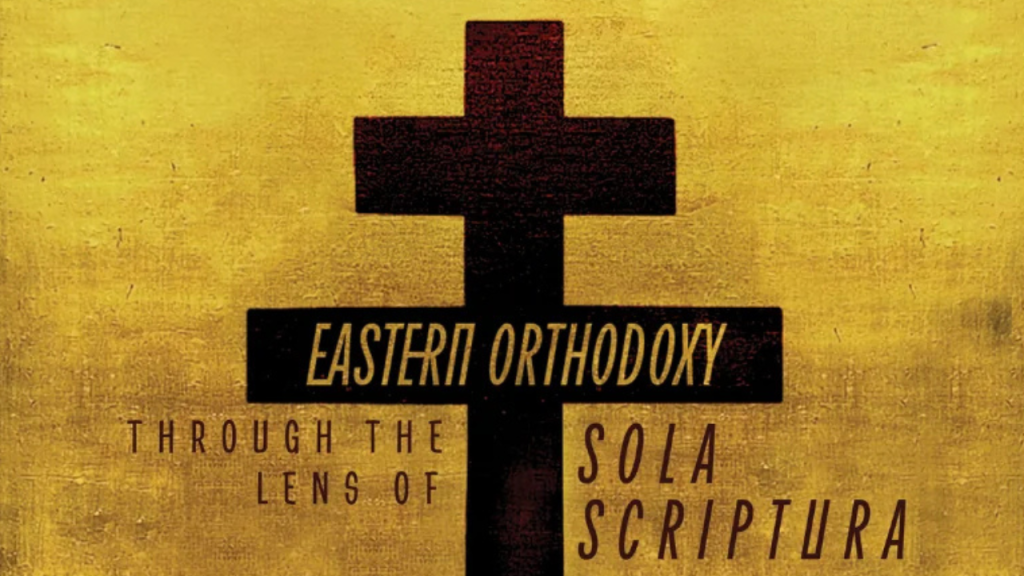
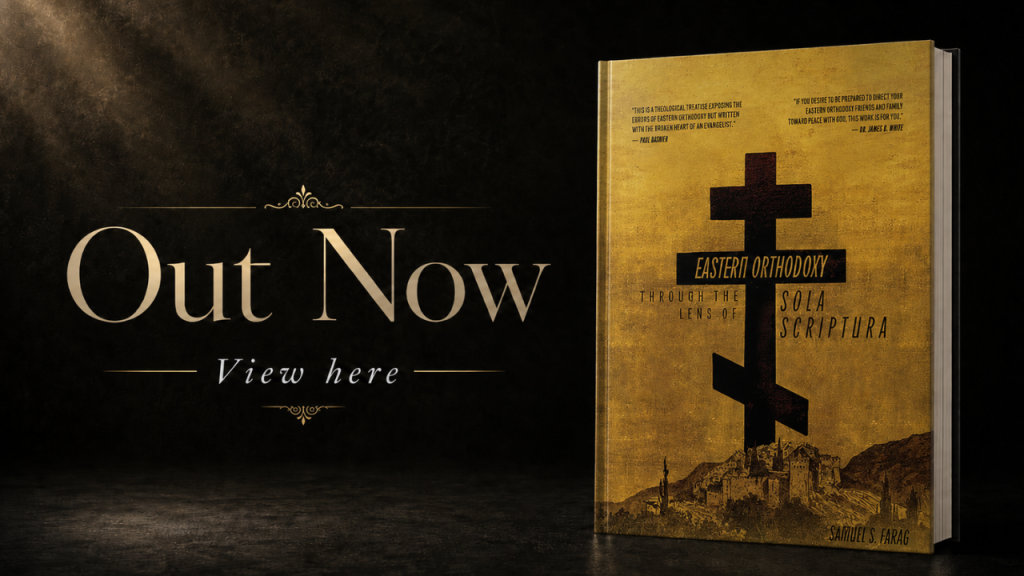
Pastor Samuel Farag serves as pastor of Bethel Baptist Church in Gorham, New York, and as a missionary with Village Missions. Saved out of the Coptic Orthodox Church in 2017, he is the author of *Eastern Orthodoxy: Through the Lens of Sola Scriptura*. He lives in the Finger Lakes region with his wife, Mercy, and their two daughters.
John Stott, the well-known preacher and Bible commentator, once said: “To tamper with the gospel is to trouble the church… Indeed, the church’s greatest troublemakers (now as then) are not those outside who oppose, ridicule, and persecute it, but those inside who try to change the gospel… Conversely, the only way to be a good churchman is to be a good gospel man.
The best way to serve the church is to believe and to preach the gospel.”
This principle is foundational! Of all the epistles in the New Testament, the epistle that
the apostle Paul wrote to the Galatians contained the most urgent and harshest rebuke.
Why?
Because the Galatians were being seduced by the Judaizers, an apostate group that regarded the laws of the Old Testament, such as circumcision, as still mandatory for all Christians. However, the apostle Paul was quick to instruct the church that to add any requirements to the gospel is to preach a different gospel, and to preach a different gospel is to preach no gospel at all.
In Galatians, Paul writes, “But even if we or an angel from heaven should preach to you a
gospel contrary to the one we preached to you, let him be accursed. As we have said before, so now I say again: If anyone is preaching to you a gospel contrary to the one you received, let him be accursed” (Galatians 1:8-9).
In our current day, there are modern-day apostate “Judaizers” continuing to seduce the church. They claim to come from a line of unbroken apostolic succession. They claim to partake in the same practices that the apostles deposited into the church. They even claim to teach the gospel despite being wolves in sheep’s clothing.
They are the Eastern Orthodox Church, and they have been seducing many, especially of
late, of those who at one time identified as being Protestant. They make many bold claims about their origins and authority, which can sound appealing to those who only have a surface-level understanding of what the Eastern Orthodox Church teaches, as well as to those with a limited understanding of Scripture and church history.
So, let’s begin by covering a few basic problematic doctrines that the Eastern Orthodox Church holds, which are contradictory to Scripture, and ultimately lead to additional mandates being added to the good news of Jesus Christ.
Infallibility of the Eastern Orthodox Church
First, we need to look at the doctrine of the supposed infallibility of the Eastern Orthodox Church. This doctrine is officially found in The Confession of Dositheus of 1672. Decree states: Wherefore, the witness also of the Catholic Church [Catholic Church here meaning the Eastern Orthodox Church] is, we believe, not of inferior authority to that of the Divine Scriptures. For one and the same Holy Spirit being the author of both, it is quite the same to be taught by the Scriptures and by the Catholic Church. Moreover, when any man speaks from himself he is liable to err, and to deceive, and be deceived; but the Catholic Church, as never having spoken, or speaking from herself, but from the Spirit of God — who being her teacher, she is ever unfailingly rich — it is impossible for her to in any wise err, or to at all deceive, or be deceived; but like the Divine Scriptures, is infallible, and has perpetual authority.
So, the first problem we encounter with the Eastern Orthodox Church is that they claim, as a church, to be just as infallible as the Scriptures. They believe that just as the Holy Spirit breathed out the Word of God and just as inerrant and infallible as the Bible is, so is the Eastern Orthodox Church just as inerrant and infallible when they speak in an official capacity. This unbiblical belief can be so damning and ultimately leads to a different gospel, which is directly related to the idolatry of saints.
The second unbiblical doctrine we need to understand when we are talking about the Eastern Orthodox Church is their belief in the infallibility of the ecumenical councils. The Eastern Orthodox Church believes in seven ecumenical councils, and of these councils, the most problematic is the seventh one. The most disturbing features of the council are the anathemas they declared on anyone who does not follow their teaching on the veneration of icons.
Anathema means to be cursed by God to hell unless one repents. The Eastern Orthodox Church will only lift an anathema if one joins their church, in addition to repenting.
Here is just a sampling of the anathemas from the Seventh Ecumenical Council, which is
also known as Second Nicaea, and took place in AD 787:
To those who apply to the sacred images the sayings in divine Scripture against idols,
anathema! To those who do not kiss the holy and venerable images, anathema! To those
who call the sacred images idols, anathema! To those who say that Christians have
recourse to the images as to gods, anathema! To those who knowingly communicate with those who insult and dishonor the sacred images, anathema!
Eastern Orthodox apologists sometimes try to soften the meaning of an anathema. Yet,
here is the definition of anathema by the Eastern Orthodox saint John Maximovitch, which is in line with what the writers of those anathemas from Second Nicaea believed:
In the acts of the Councils and the further course of the New Testament Church of Christ, the word “anathema” came to mean complete separation from the Church. “The Catholic and Apostolic Church [again, this is the Eastern Orthodox Church being talked about here] anathematizes,” “let him be anathema,” “let it be anathema,” means a complete tearing away from the church. While in cases of “separation from the communion of the Church” and other epitimia or penances laid on a person, the person remained a member of the Church, even though his participation in her grace-filled life was limited, those given over to anathema were thus completely torn away from her until their repentance.
Realizing that she ([the] Eastern Orthodox Church) is unable to do anything for their
salvation, in view of their stubbornness and hardness of heart, the earthly church lifts
them up to the judgment of God. That judgment is merciful unto repentant sinners, but
fearsome for the stubborn enemies of God. “It is a fearful thing to fall into the hands of
the living God … for our God is a consuming fire”. Anathema is not final damnation:
until death repentance is possible. “Anathema” is fearsome not because the Church
wishes anyone evil or God seeks their damnation. They desire that all be saved. But it is
fearsome to stand before the presence of God in the state of hardened evil: nothing is
hidden from Him.
So, according to the Seventh Ecumenical Council, if one does not bow down and
venerate icons or if someone speaks against the Eastern Orthodox Church’s idolatrous practice of venerating icons, that person is a stubborn enemy of God. Their only chance of salvation is to repent and join the Eastern Orthodox Church.
There is no biblical evidence for these claims.
Truly, what difference is there between the Judaizers of Paul’s day and the Eastern Orthodox Church in our day? Both add mandatory requirements to the gospel. Both condemn true, genuine believers, and both are themselves under true anathema by the authority of the Word of God for their false teachings and the contradictory works-based gospels they peddle.
Thirdly, we must understand that the Eastern Orthodox Church believes that any official readings and hymns recited within their Divine Liturgy are also considered infallible. Here are some problematic readings that make an idol out of Mary in the form of hymns, which are held to the same level of authority as Scripture.
Orthodox church proclaims that she is the “salvation of my soul.” These verses venerating Mary are slanderous to the pure and true gospel message found in Scripture and preached by our Lord Jesus and the apostles. The false claim that this is hyperbolic or poetic language is an Eastern Orthodox apologetics tactic and is very deceptive, since this very same language is not only used in hymns but is also used in Eastern Orthodox homilies and prayers.
For example, in The Mother of the Light prayer book, the second prayer says this to
Mary, “Heal my miserable soul [because] I do not dare ask, nor do I have anyone to entreat on my behalf, the loving God to heal my many sins and incurable wounds.” 10 This is one of a myriad of examples in this prayer book from the ninth century, which is highly regarded as having faithful prayers to Mary. Therefore, even in Orthodox prayer books, Mary is seen as a necessary mediator to go through in order to get to God. In fact, tremendous shame is put on the sinner, and he is urged not to approach God directly, but instead to go to Mary who is presented as more compassionate, for they claim she will then go on the sinner’s behalf to God and persuade Him to offer forgiveness.
Additionally, this attitude is seen in messages by prominent saints of the church, an
example being Gregory Palamas. He says in his Fifty-Third Homily in Paragraph 37, “She
(Mary) alone forms the boundary between created and uncreated nature, and no one can come to God except through her and the mediator born of her, and none of God’s gifts can be bestowed on angels or men except through her.” 11 This is not hyperbolic or poetic language being used here. Instead, it is the same doctrine of the Eastern Orthodox Church, which is found all throughout their hymns, prayer books, and teachings from their very own saints. However, the Word of God is clear to those with, according to Scripture, ears to listen and who approach God with humility. Jesus said, “I am the way, and the truth, and the life. No one comes to the Father except through me” (John 14:6).
Jesus never said that Mary was part of the salvation equation or that one was ever
encouraged to go to her for anything. The Scriptures are also clear that it is the Holy Spirit and not Mary who bestows gifts to believers:
To each is given the manifestation of the Spirit for the common good. For to one is given
through the Spirit the utterance of wisdom, and to another the utterance of knowledge
according to the same Spirit, to another faith by the same Spirit, to another gifts of
healing by the one Spirit, to another the working of miracles, to another prophecy, to
another the ability to distinguish between spirits, to another various kinds of tongues, to
another the interpretation of tongues. All these are empowered by one and the same
Spirit, who apportions to each one individually as he wills (1 Corinthians 12:7-11).
Again, Mary is nowhere to be found. So, we have a choice: Are we going to listen to men and the “wisdom” they teach, or are we going to follow and obey the Word of God? Are we going to follow a different gospel filled with the innovations of men, or are we going to follow the true gospel as found in Scripture?
In another supposed infallible Orthodox hymn, The Entry of the Most Holy Theotokos
into the Temple, we find the strange and unbiblical belief that the Eastern Orthodox Church holds about Mary, as a 3-year-old girl, going to live in the Holy of Holies for a number of years.
Clearly, this is a violation of God’s law as found in Leviticus 16, which states that the only
person allowed in the Holy of Holies is the high priest, and he is only allowed once a year on the Day of Atonement.
Ignoring for a moment the absurdity of this claim and just focusing on the words of this
hymn, we find even more problematic beliefs that contrast with the gospel. It says in this hymn that Mary is the “acceptable sacrifice” and “the ewe-lamb of God without spot, the dove without blemish.” It claims she possessed “a body that was never subject to the taint of sin,” and the Orthodox faithfully sing to her, “through you we have been reconciled with God.”
Again, not a single prophet, apostle, or our Lord Himself ever made these distorted
claims, and we have no reason to engage in this idolatrous and blasphemous behavior. It is shocking that the average Orthodox catechumen is purposely not presented with this kind of doctrine upfront, and many people born into the church far too easily take what their priests, bishops, and patriarchs teach to be inerrant and infallible, despite, as we have seen, the numerous contradictions to Scripture.
Once again, the Scriptures have spoken on this matter, as we see in the epistle to the
Romans, “For while we were still weak, at the right time Christ died for the ungodly. For one will scarcely die for a righteous person—though perhaps for a good person one would dare even to die— but God shows his love for us in that while we were still sinners, Christ died for us”
(Romans 5:6-8). Christ died for us, and the writers of Scripture never felt the need to mention any contribution of Mary. So, are we going to speak in a manner that honors God’s Word or put our faith in men like Gregory Palamas or the leaders of the Eastern Orthodox Church?
Are we to call Mary “the ewe-lamb of God without spot” 16 or are we going to trust in
what God says in Scripture? First Peter makes it clear when we read, “Knowing that you were ransomed from the futile ways inherited from your forefathers, not with perishable things such as silver or gold, but with the precious blood of Christ, like that of a lamb without blemish or spot”
(1 Peter 1:18-19). Christ is the spotless lamb and not anyone else. Christ is the only person to ever walk this earth who is sinless, and not anyone else. That includes Mary. She was a sinner in “Entrance of the Mother of God into the Temple,” Orthodox Christianity,
need of a Savior just like the rest of mankind. In fact, look at Jesus’s attitude toward a woman who was praising Mary, as found in Luke 11:27-28, which says, “As he said these things, a woman in the crowd raised her voice and said to him, ‘Blessed is the womb that bore you, and the breasts at which you nursed!’ But he said, ‘Blessed rather are those who hear the word of God and keep it!’”
This woman said nothing shocking by the standards of the Eastern Orthodox Church. In
fact, she would be viewed as not praising Mary enough, as we have seen with the idolizing and irreverent praise and veneration they give her. The woman’s comments really don’t even come close to the language used in canonical hymns, prayers, and homilies by the Eastern Orthodox Church. Yet, Jesus’s words are bold and clear. He says, “Blessed rather are those who hear the word of God and keep it” (Luke 11:28)! That is, Mary is truly blessed as Scripture has revealed, but the greater and true blessing that should be our focus is found in those who hear the Word of God and obey it! That is where the true blessing is found! Overt blessing, praise, and veneration of Mary that goes beyond the language and practices of Scripture are never encouraged. So, it is
ironic then that the Eastern Orthodox Church’s mandatory veneration of Mary can only be achieved either by being totally ignorant of God’s Word or simply ignoring it.
Rejection of Justification by Faith Alone
Fourth, let us take the time to examine how the Eastern Orthodox worldview rejects the biblical doctrine of justification by faith alone. Their dismissal of this doctrine is cemented in documents like The Confession of Dositheus, which as discussed, is considered to be an infallible text viewed on the same level of Scripture by the Eastern Orthodox Church, and it says this in Decree We believe a man to be not simply justified through faith alone, but through faith which works through love, that is to say, through faith and works. But [the idea] that faith can fulfill the function of a hand that lays hold on the righteousness which is in Christ, and can then apply it unto us for salvation, we know to be far from all Orthodoxy. For faith so understood would be possible in all, and so none could miss salvation, which is obviously false. But on the contrary, we rather believe that it is not the correlative of faith, but the faith which is in us, justifies through works, with Christ. But we regard works not as witnesses certifying our calling, but as being fruits in themselves, through which faith becomes efficacious, and as in themselves meriting, through the Divine promises that each of the Faithful may receive what is done through his own body, whether it be good or bad.
Thus, there is no denying the fact that the theological system of the Eastern Orthodox
Church is a merit-based system in which one earns the right to salvation. In this case, salvation is not a gift from God as Scripture teaches, but a right due to the individual based on their performance. The Orthodox Church may concede that faith is necessary, but it also claims that faith is insufficient. They view good works as a necessary means of salvation, revealing how the work of Christ on the cross was not enough for them.
In their doctrine of soteriology, the doctrine of salvation, they are contributing members
of salvation with God. Yet, they seem to pass over key passages like John 1:12-13 that say
otherwise. Here, John the beloved disciple records, “But to all who did receive him, who
believed in his name, he gave the right to become children of God, who were born, not of blood nor of the will of the flesh nor of the will of man, but of God.” God could not be clearer. We are not born again by the will of man or the will of the flesh. We are born again solely by the very will of God!
Furthermore, many Eastern Orthodox falsely claim that James denies the doctrine of faith alone. However, this claim exposes how the apologists of their tradition have a history of using poor hermeneutics. The ground zero passage in question here is James 2:14-26: What good is it, my brothers, if someone says he has faith but does not have works? Can that faith save him? If a brother or sister is poorly clothed and lacking in daily food, and one of you says to them, “Go in peace, be warmed and filled,” without giving them the Holy Standards, things needed for the body, what good is that? So also faith by itself, if it does not have works, is dead. But someone will say, “You have faith and I have works.” Show me your faith apart from your works, and I will show you my faith by my works. You believe that God is one; you do well. Even the demons believe—and shudder! Do you want to be shown, you foolish person, that faith apart from works is useless? Was not Abraham our father justified by works when he offered up his son Isaac on the altar? You see that faith was active along with his works, and faith was completed by his works; and the Scripture was fulfilled that says, “Abraham believed God, and it was counted to him as righteousness”—and he was called a friend of God. You see that a person is justified by works and not by faith alone. And in the same way was not also Rahab the prostitute justified by works when she received the messengers and sent them out by another way?
For as the body apart from the spirit is dead, so also faith apart from works is dead.
This passage must come into harmony and not conflict with other passages like Ephesians 2:8-9, in which Paul, by the inspiration of the Holy Spirit, teaches, “For by grace you have been saved through faith. And this is not your own doing; it is the gift of God, not a result of works, so that no one may boast.” There is no doubt that with the right systematic theology in mind and utilizing faithful hermeneutics, both these passages complement each other. What is necessary, and oftentimes haphazardly overlooked, is how key terms are defined. In the epistle of James, when the Lord’s brother is talking about how “a person is justified by works and not by faith alone” (James 2:24), we must interpret this in context and resist cherry-picking just to make a passage fit one’s worldview.
The “faith” being talked about here is the faith James calls “dead” in James 2:17, and that faith is contrary to genuine saving faith, which is mentioned in James 2:18 and 22. To fail to make that distinction is to miss the whole point of this passage. James is saying that legitimate saving faith always and without exception produces good works. In other words, the tree of faith determines the kind of fruits it produces. It is not the other
way around. Paul then is not in conflict with James but agrees with him when he teaches that we are “saved through faith. And this is not your own doing; it is the gift of God, not a result of works” (Ephesians 2:8-9). In the Eastern Orthodox mindset, with its adherence to man-made doctrines, they cannot faithfully interact with passages like Ephesians 2:8-9, and quite frankly, they are not even able to faithfully interact with most of Scripture. That is why they use tradition and the sayings of the church fathers as a crutch. This is just a page from the playbook of the Pharisees and scribes who did the same thing with their own traditions and rabbis.
Minimizing Penal Substitutionary Atonement
Fifth, although not officially dubbed a heresy by them, the Eastern Orthodox Church goes to great lengths to minimize and, most of the time, outright denies the doctrine of penal substitutionary atonement despite its clear evidence in Scripture and church history. Take, for instance, this remark found in the video, “Orthodoxy and the Atonement,” by Frederica Mathewes-Green, author of the wildly popular Orthodox book, Welcome to the Orthodox Church: An Introduction to Eastern Christianity. She writes regarding the forgiveness of sin, “We just believe that God just forgives us. He doesn’t expect anyone to pay. It isn’t that he gets a third party to pay. He just lets it go.”
This is not just a one-off or unique opinion but the view of most in the Eastern Orthodox
Church. They criticize those who hold to the doctrine of penal substitutionary atonement as wrongly viewing the atonement in legal terms, like that in a courtroom. But where did that language come from? Were our sins just forgiven because God simply forgave us, arbitrarily, or did Someone have to pay for those sins that were committed?
As always, let us look to the Word of God for the answer. The Old Testament Scriptures
record this powerful truth in Isaiah: “But he was pierced for our transgressions; he was crushed for our iniquities; upon him was the chastisement that brought us peace, and with his wounds we are healed” (Isaiah 53:5). Additionally, the New Testament confirms this truth. In his epistle, the
apostle Peter says, “He himself bore our sins in his body on the tree, that we might die to sin and live to righteousness. By his wounds you have been healed” (1 Peter 2:24). Clearly, this is a picture of the Father crushing the Son, as taught in Isaiah 53:10. Clearly, this is a picture of Jesus receiving the full wrath of God on the cross. Discernibly, if the Father could have just forgiven us of our sins without Jesus having to go to the cross, that would have happened.
Jesus in His humanity even pleaded with the Father to take away this cup of wrath when
He prayed, “Father, if you are willing, remove this cup from me. Nevertheless, not my will, but yours, be done” (Luke 22:42). Correspondingly, the plan of salvation is not as insignificant as Frederica Mathewes-Green or the Eastern Orthodox Church claims. Jesus, in a very real sense, took our place on the cross and absorbed the full wrath of God that was meant for all who would ever believe in Him: wicked sinners, dead in trespasses and sins. To minimize or reject this is to reject the heart of the gospel of Jesus Christ! This is yet another strike against the Orthodox Church that proves they push another gospel.
High View of Asceticism in the Eastern Orthodox Church
Sixth, I would like to look at the abusive and shocking ascetic practice of monasticism in the Eastern Orthodox Church. The best place to turn to get a picture of monastic life in the Eastern Orthodox Church is to look at The Ladder of Divine Ascent by Saint John of the Ladder, aka Saint John Climacus. This work is not only a timeless classic of Eastern Orthodox spiritual life, but it is also considered essential reading for all monastics and laypeople alike in Eastern Orthodoxy. In fact, every year during the season of Lent, every single Eastern Orthodox monastery reads this book out loud all the way through, and lay congregants are encouraged to read the book as well. It is easily the most widely used handbook of the ascetic life in the Orthodox Church.
Seeing his fellow monks praying that demons would possess them, as he said, “And I, my friends, found so much pleasure in their grief that I forgot myself, and was wholly rapt in mind, and could not contain myself.” Not only is this a disgraceful insult to Christ, but it is also a mockery of what faithful Christianity looks like. God’s beautiful and perfect Word paints another picture and views these acts of asceticism in a very different light. Just look at what Paul said in his epistle as he wrote to the Colossians. “These have indeed an appearance of wisdom in promoting self-made religion and asceticism and severity to the body, but they are of no value in stopping the indulgence of the flesh” (Colossians 2:23).
Denying Sola Scriptura
Finally, let’s look at the root of all these problems: the Eastern Orthodoxy’s low view of the Scriptures. Again, let’s look at The Confession of Dositheus, but this time let’s look at Question One, which says:
Should the Divine Scriptures be read in the vulgar tongue [common language] by all
Christians? No. Because all Scripture is divinely inspired and profitable, we know, and
necessarily so, that without [Scripture] it is impossible to be Orthodox at all.
Nevertheless, they should not be read by all, but only by those who with fitting research have inquired into the deep things of the Spirit, and who know in what manner the Divine Scriptures ought to be searched, and taught, and finally read. But to those who are not so disciplined, or who cannot distinguish, or who understand only literally, or in any other way contrary to Orthodoxy what is contained in the Scriptures, the Catholic Church, knowing by experience the damage that can cause, forbids them to read [Scripture].
Indeed, it is permitted to every Orthodox to hear the Scriptures, that he may believe with the heart unto righteousness, and confess with the mouth unto salvation. But to read some parts of the Scriptures, and especially of the Old [Testament], is forbidden for these and other similar reasons. For it is the same thing to prohibit undisciplined persons from reading all the Sacred Scriptures, as to require infants to abstain from strong meats.
Instead of trusting in the authority of the Scriptures, the Eastern Orthodox Church discourages individuals from reading the Bible unless they subscribe to its man-made doctrines. These man-made extrapolations stem from what they claim was the practice of the apostles. However, since they have no actual proof of this, they appeal to oral tradition and an unwritten deposit of infallible holy tradition. This tactic is nothing new. The Pharisees were notorious for doing the very same thing. In their case, they appealed to oral traditions from Moses. Hence, they claimed to hold to their own unwritten deposit of infallible holy tradition, which they called “The Tradition of the Elders.”
Instead, let’s find out what Jesus has to say about that kind of unhealthy idolization of man-made traditions and man-centered doctrines. Let’s look at Mark 7:1-13, which reads: Now when the Pharisees gathered to him, with some of the scribes who had come from Jerusalem, they saw that some of his disciples ate with hands that were defiled, that is, unwashed. (For the Pharisees and all the Jews do not eat unless they wash their hands properly, holding to the tradition of the elders, and when they come from the marketplace, they do not eat unless they wash. And there are many other traditions that they observe, such as the washing of cups and pots and copper vessels and dining couches.) And the Pharisees and the scribes asked him, “Why do your disciples not walk according to the tradition of the elders, but eat with defiled hands?” And he said to them, “Well did Isaiah prophesy of you hypocrites, as it is written, ‘This people honors me with their lips, but their heart is far from me; in vain do they worship me, teaching as doctrines the commandments of men.’ You leave the commandment of God and hold to the tradition of men.” And he said to them, “You have a fine way of rejecting the commandment of God in order to establish your tradition! For Moses said, ‘Honor your father and your mother’; and, ‘Whoever reviles father or mother must surely die.’ But you say, ‘If a man tells his father or his mother, “Whatever you would have gained from me is Corban”’ (that is, given to God)— then you no longer permit him to do anything for his father or mother, thus making void the word of God by your tradition that you have handed down. And many such things you do.”
Therefore, in order to accept the Eastern Orthodox Church’s false gospel, one must hold to Sola Ecclesia (“the Church alone”). The Eastern Orthodox Church believes in only this one sola. This is derived from their claims of being an infallible apostolic church and holding to the beliefs of an infallible holy tradition that is based on infallible ecumenical councils, which themselves are based on infallible interpretations of Scripture, along with beliefs in an infallible consensus of the fathers.
Thus, based on this Orthodox dogma, one is saved by the Church alone, through the
Church alone, in the Church alone, according to the Church alone, all for the glory of the Eastern Orthodox Church alone. Protestants who uphold Scripture as the sole infallible and inerrant authority firmly adhere to the Five Solas. Based on the Word of God, one is saved by grace alone, through faith alone, in Christ alone, according to Scripture alone, all for the glory of God alone.
The True Gospel of Jesus Christ
While the Eastern Orthodox Church may seem appealing, don’t be lured away from the truth by the deceptive message they are touting. The Eastern Orthodox Church is an apostate church that promotes a different gospel contrary to the pure gospel preached by Jesus Christ, the apostles, and those who genuinely have been born from above. The true gospel is exclusively found in the Word of God and makes no room for the foolishness of man to pollute it.
To the current members of the Eastern Orthodox Church, to catechumens interested in officially joining the church, and to those dangerously flirting with this church, I appeal to you through the words of Paul when he writes:
O foolish Galatians! Who has bewitched you? It was before your eyes that Jesus Christ was publicly portrayed as crucified. Let me ask you only this: Did you receive the Spirit by works of the law or by hearing with faith? Are you so foolish? Having begun by the Spirit, are you now being perfected by the flesh? Did you suffer so many things in vain—if indeed it was in vain? Does he who supplies the Spirit to you and works miracles among you do so by works of the law, or by hearing with faith— just as Abraham “believed God, and it was counted to him as righteousness”? Know then that it is those of faith who are the sons of Abraham. And the Scripture, foreseeing that God would justify the Gentiles by faith, preached the gospel beforehand to Abraham, saying, “In you shall all the nations be blessed.” So then, those who are of faith are blessed along with Abraham, the man of faith (Galatians 3:1-9).
The gospel is not about bowing down to an apostate church and the traditions of man. A true and genuine born-again believer embodies the reality found in the epistle to the Galatians where Paul says, “I have been crucified with Christ. It is no longer I who live, but Christ who lives in me. And the life I now live in the flesh I live by faith in the Son of God, who loved me and gave himself for me” (Galatians 2:20).
That new life is the new life that we live by faith. That means true Christians live a life
where they genuinely believe with all their hearts and all their minds that God is the creator of all things. They believe that He was, is, and will forever be, as He has no beginning or end. Our God, who is three persons in one being–Triune–did not need anything. He is totally self-sufficient. Yet, out of His love, He created mankind in His own image. Male and female, He created them, and everything He created was good.
Nevertheless, the serpent, our enemy, led Adam and Eve to disobey God’s command in an act of treason. That’s when sin entered the world, and mankind fell. All hope seemed to be lost until God made a promise in Genesis 3 that from the seed of the woman, the Messiah would come. He would save His elect and crush the serpent’s head. That man, the “serpent-crusher,” is the God-Man, Jesus Christ, who was sent into our world by the Father in an act of love. Christ lived a perfect life and voluntarily took the place of us, wicked sinners, and on that cruel cross at Calvary, Jesus gave His life. Yet, the story did not end there. Three days later, God the Father raised God the Son from the dead by the power of God the Holy Spirit! The Trinity, all working
in action together as they always do. So, all who put their trust and faith in Christ, all who genuinely repent and surrender, all who acknowledge Jesus as their personal Lord and Savior, all who believe in Him—will be saved and experience eternal life with Him. That is the good news!
That is the gospel! Nothing more. Nothing less. As Romans 10:9-10 declares, “Because, if you confess with your mouth that Jesus is Lord and believe in your heart that God raised him from the dead, you will be saved. For with the heart one believes and is justified, and with the mouth one confesses and is saved.”
Has this article encouraged or helped you?
Exposit the Word is a reader-supported ministry dedicated to proclaiming God’s Word faithfully and freely. If you have been blessed by this ministry and would like to help us continue producing biblical resources, please consider supporting us here.
Super helpful. Thank you!